Fountain Hills, Arizona
EPCOR 2025 Water Quality Report — Chaparral City (PWS AZ0407017) serves about 14,500 connections in the Town of Fountain Hills and portions of Scottsdale. Hardness 16 grains per gallon (2024 unregulated table). Chlorine residual 0.83 ppm (range 0.70–0.94) in the 2025 distribution table. That is EPCOR Chaparral City chemistry — not all of Scottsdale. No Measure S-style residential softener ban turned up.
Arizona · Salt-softener legality
- Hardness16 gpg
- Chlorine0.83 ppm (range 0.70–0.94)
- Fluoride1.74 ppm (ND–1.74)
- Arsenic7.31 ppb (range 3.1–7.3)
- Nitrate3.13 ppm (ND–3.13)
- Sodium110 ppm (range 54–110)
What to do in Fountain Hills
Salt-based water softener
No district prohibition on a brine drain turned up.
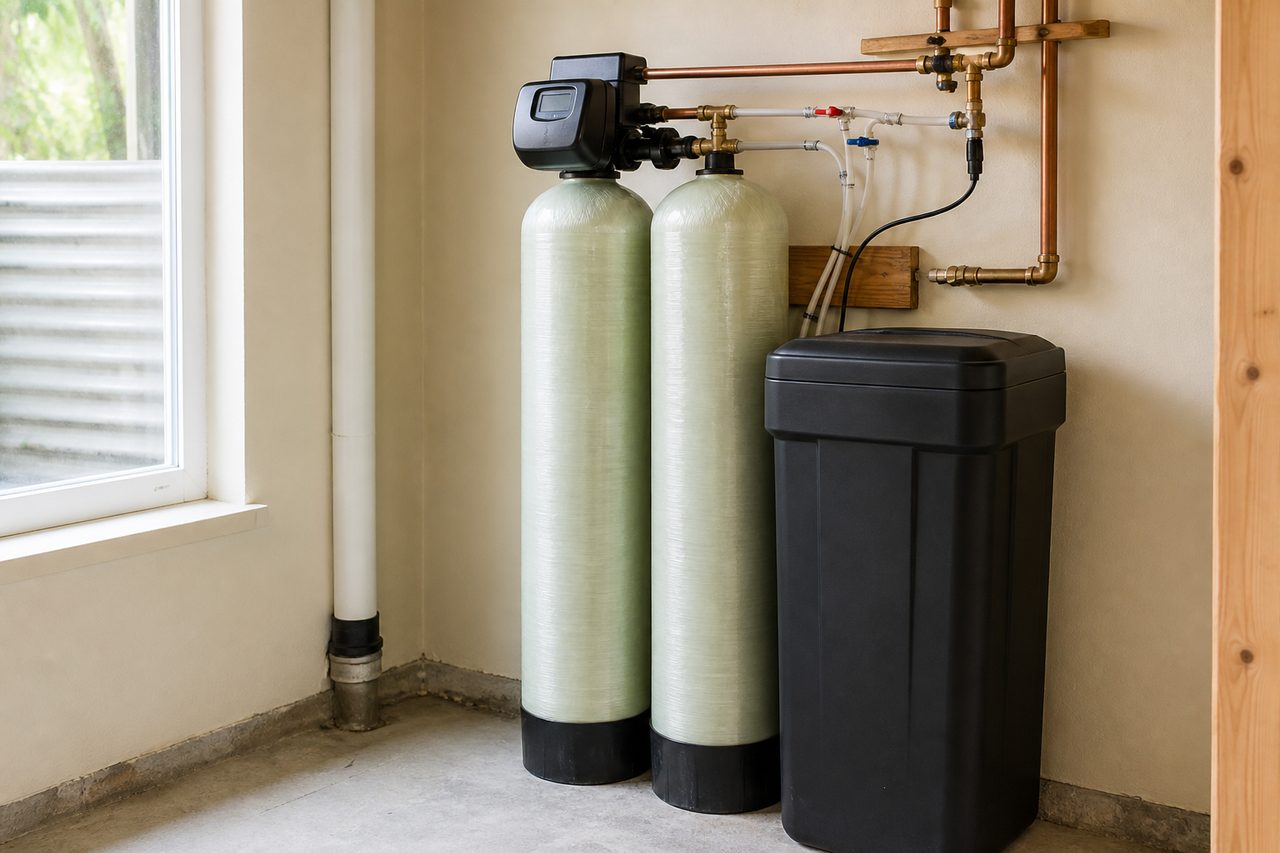
A salt-based softener is the thing that actually removes hardness. Size it from your grains and how much water you use, not bathroom count. It needs a drain.
Hard water. A salt softener is the box that actually removes it.
Amazon lists shipping and returns on that product page. We do not warehouse the equipment.
Also for the kitchen
Under-sink reverse osmosis
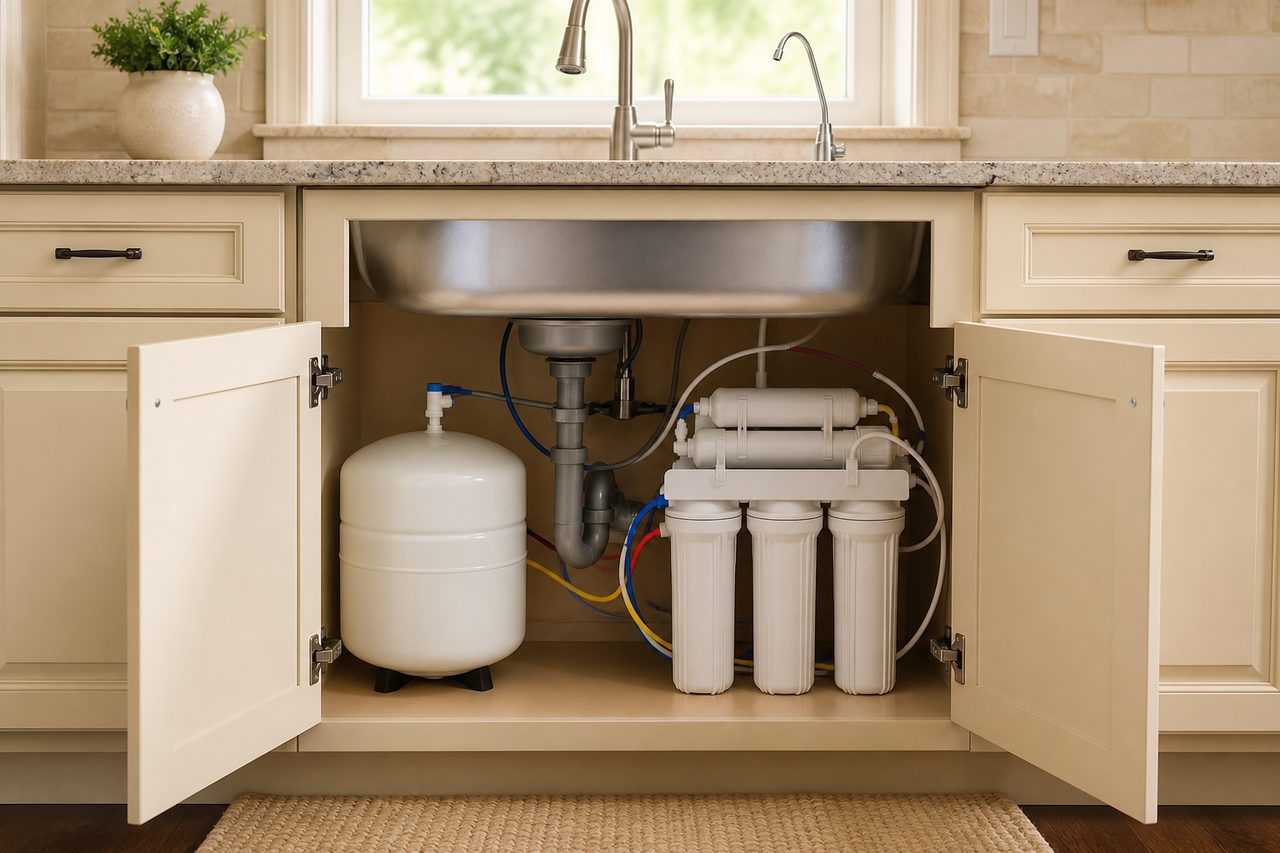
Cloud RO is an under-sink reverse osmosis system — NSF/ANSI 58, kitchen tap, not a whole-house tank. The primary button is a tagged Amazon under-sink RO listing. Cloud buy-direct and Waterdrop sit under that. Check the exact listing if PFAS is why you are shopping. A certifier-listed pitcher is the cheap first step.
Buy Cloud RO directShop Waterdrop reverse osmosisShop PFAS-listed pitchers
Some links are affiliate links. If you buy through one, we may earn a commission. That does not change the match, and it is not a medical claim.
As an Amazon Associate we earn from qualifying purchases.
Other options that still fit
Salt-free conditioner
A salt-free conditioner changes how scale sticks. It does not soften. Soap and spots stay closer to untreated. No brine line.
Whole-house carbon for chlorine
That is chlorine. A whole-house carbon filter with an NSF/ANSI 42 chlorine claim is the usual match. A softener will not take chlorine out.
Test the tap first
A homeowner kit is a start. It is not a state-certified lab. Use a certified lab when the decision is expensive.
Softener vs carbon vs under-sink RO
A sketch for Fountain Hills, tied to the best match above. Not a quote.
| Box | What it does | Ballpark (estimate) |
|---|---|---|
| Salt-based softenerBest match | Removes hardness. Needs a drain. Illegal in some sewer districts. | About $800–$2,500 for a common residential unit (equipment). Installed jobs run higher. |
| Whole-house carbon | Chlorine or chloramine taste — match the listing. Does not soften. | About $400–$1,800 for a typical tank-and-head kit (equipment). |
| Under-sink reverse osmosisBest match | Kitchen tap. Check NSF/ANSI 58 if PFAS or nitrate is why you are shopping. | About $200–$600 on Amazon search; named under-sink units vary. |
These are ballpark equipment ranges, not installed quotes and not what a dealer will write on a kitchen-table sheet. Prices move. Confirm the sewer rule before you price a brine tank.
On the report
- Water utility
- EPCOR Chaparral City
- Hardness
- 16 grains per gallon on the unregulated substances table (year sampled 2024). The FAQ prints the same figure as approximately 16 gpg. The report does not print hardness in ppm. We do not invent a conversion. — EPCOR 2025 Water Quality Report — Chaparral City (PWS AZ0407017)
- Disinfectant
- Chlorine residual 0.83 ppm (range 0.70–0.94), MRDL 4 / MRDLG 4, 2025 distribution-system table. The FAQ says chlorine is added as a disinfectant. — EPCOR 2025 Water Quality Report — Chaparral City (PWS AZ0407017)
- Brine / salt to the sewer
- No district prohibition found in current research. No Fountain Hills town or county sanitation prohibition comparable to LACSD Measure S turned up in the research for the utility's report. Still ask the agency on the sewer bill before cutting a brine drain — rules change by jurisdiction, not by metro-area folklore.
How to get your water tested
The report on this page is for the public water system. It is not a test of the faucet in one house. Pipes inside a house can change the water.
For a test of your own tap, use a laboratory on the Arizona Department of Health Services list of certified drinking-water labs.
If your water comes from a private well, test it once a year. A city water report does not cover a private well.
Also around here
Extra context besides the utility report and the chart above — geology, an unregulated table, or a published study. Not a second set of printed tap numbers.
- MicroplasticsWHO’s 2019 review examined studies that found microplastic particles in treated tap and bottled water in many places. That is a published-occurrence finding, not a number from this city’s water-quality report, and we do not invent a particles-per-liter count for the tap.Microplastics in drinking-water — World Health Organization
Fountain Hills drinking water is EPCOR Chaparral City (PWS AZ0407017). The 2025 report says EPCOR provides water to about 14,500 service connections in the Town of Fountain Hills and portions of the City of Scottsdale. Sources are Colorado River / CAP surface water plus groundwater wells under Fountain Hills. That chemistry is this PWS — not Scottsdale Water, and not all of Scottsdale. City page for that other utility: Scottsdale.
No Town of Fountain Hills residential self-regenerating softener ban like LACSD Measure S turned up. Ask the agency on the sewer bill before you cut a brine drain. This is not a legal opinion.
The unregulated table (year sampled 2024) prints hardness 16 grains per gallon. The FAQ prints the same number as approximately 16 gpg and lists “very hard” as greater than 10.5 gpg. The report does not print hardness in ppm. We do not invent a conversion. The narrative notes seasonal hardness and taste can change because the supply mixes surface water and groundwater; the printed hardness figure is still 16 gpg.
Chlorine residual 0.83 ppm (range 0.70–0.94) on the 2025 distribution-system table. The FAQ says chlorine is added as a disinfectant.
Also on the 2025 leaving-the-plant table: fluoride 1.74 ppm (ND–1.74), arsenic 7.31 ppb (range 3.1–7.3; MCL 10), nitrate 3.13 ppm (ND–3.13), sodium 110 ppm (54–110). Unregulated 2024: pH 7.9, alkalinity 124–143 ppm. Those are printed rows, not a medical claim. Kitchen shopping stays the Cloud RO / Waterdrop path already used on other cities if a listing is why you are looking.
Questions we can answer from the report
How hard is Fountain Hills tap water?
16 grains per gallon on the unregulated substances table (year sampled 2024). The FAQ prints the same figure as approximately 16 gpg. The report does not print hardness in ppm. We do not invent a conversion. Source: EPCOR 2025 Water Quality Report — Chaparral City (PWS AZ0407017).
Does Fountain Hills use chlorine or chloramine?
Chlorine residual 0.83 ppm (range 0.70–0.94), MRDL 4 / MRDLG 4, 2025 distribution-system table. The FAQ says chlorine is added as a disinfectant. Source: EPCOR 2025 Water Quality Report — Chaparral City (PWS AZ0407017).
Is a salt-based water softener legal in Fountain Hills?
No district prohibition found. No Fountain Hills town or county sanitation prohibition comparable to LACSD Measure S turned up in the research for the utility's report. Still ask the agency on the sewer bill before cutting a brine drain — rules change by jurisdiction, not by metro-area folklore. No district prohibition on a brine drain turned up. This is not a legal opinion.
What should I do about Fountain Hills tap water?
Salt-based water softener. A salt-based softener is the thing that actually removes hardness. Size it from your grains and how much water you use, not bathroom count. It needs a drain. If the job is drinking water at the kitchen, under-sink reverse osmosis is the usual path. Cloud RO is the preferred Amazon listing on this site (tag tapmatch-20). We do not claim we use it.
Sources
- 2025 Water Quality Report — Chaparral City (PWS AZ0407017) — EPCOR. Accessed 2026-09-17.
Updated September 17, 2026. Numbers here are what the utility's report or the state record printed, plus the sewer rule. No invented detections.