Dixon, California
City of Dixon Municipal Code Chapter 14.01, Article XI (Ord. 12-004; new-install ban originally Ord. 08-018) prohibits installing a residential brine discharging water softening or conditioning appliance that discharges to the POTW, a tributary sewer, or land in the city. That is a city sewer rule authorized under Cal. Health & Safety Code § 116775 et seq. and Cal. Water Code § 13148 after Central Valley Regional Board CDO No. R5-2008-0136 — not a statewide ban. Two water providers print separate hardness columns. There is no citywide blend.
- Hardness (City)163 ppm (range 130–190)
- Hardness (Cal Water)215 ppm (range 160–260)
- Chlorine (City)0.85 ppm (range 0.71–0.96)
- Chromium-6 (City)19 ppb (range 15–22)
- Arsenic (City)1 ppb (range ND–3)
On the report
- Water utility
- City of Dixon Utilities
- Hardness
- City of Dixon municipal system (PWS CA4810009) 163 ppm as CaCO3 (range 130–190), 2024 CCR. California Water Service Dixon District 215 ppm (range 160–260), 2022–2024. Combined citywide hardness is not printed. Check which bill you have. — City of Dixon 2024 Consumer Confidence Report and California Water Service Dixon District 2024 Water Quality Report
- Disinfectant
- City of Dixon free chlorine 0.85 ppm (range 0.71–0.96), sodium hypochlorite, not chloramines, 2024 CCR. Cal Water Dixon District free chlorine 0.87 ppm (range 0.48–1.5), 2024. — City of Dixon 2024 Consumer Confidence Report and California Water Service Dixon District 2024 Water Quality Report
- Sanitation district
- City of Dixon (POTW / sewer)
- Brine / salt to the sewer
- Self-regenerating salt softeners prohibited (district rule). Chapter 14.01, Article XI, § 14.01.1140 (Ord. 12-004; new-install ban originally Ord. 08-018, Nov. 25, 2008) says no person shall install or assist in installing a residential brine discharging water softening or conditioning appliance that discharges into the POTW, a private or community sewer tributary to the POTW, or land within the city. Violation is a fine up to $1,000 and a public nuisance. Existing units that discharged to the POTW were required to be removed by November 11, 2010 (§ 14.01.1150). Findings EE names portable-exchange tanks regenerated off-site outside Dixon as remaining legal alternatives that do not discharge brine to the POTW. The Director may grant a medical exemption only if § 14.01.1180(A)–(C) are all met. That is a City of Dixon sewer/POTW rule driven by CDO No. R5-2008-0136 (adopted Sept. 11, 2008) — not a statewide ban. Ask Utilities or the agency on the sewer bill about the address.
Also around here
Extra context besides the utility report and the chart above — geology, an unregulated table, or a published study. Not a second set of printed tap numbers.
- MicroplasticsWHO’s 2019 review examined studies that found microplastic particles in treated tap and bottled water in many places. That is a published-occurrence finding, not a number from this city’s water-quality report, and we do not invent a particles-per-liter count for the tap.Microplastics in drinking-water — World Health Organization
- Cal Water Dixon District (separate utility)California Water Service prints its own Dixon District table. Those numbers are that utility’s results, not a citywide blend and not the City of Dixon municipal CCR.Hexavalent chromium 4.7 ppb (range 1.3–9.9), MCL 10, in compliance. Arsenic ND (range ND–2.9). Nitrate as N 4.8 ppm (range 3.1–5.9). Sodium 56 ppm (range 51–60). Chloride 18 ppm (range 12–32). Free chlorine 0.87 ppm (range 0.48–1.5).2024 Water Quality Report, Dixon District — California Water Service
- City municipal extrasThe City of Dixon 2024 CCR prints these on the municipal table. They are that system’s numbers, not Cal Water’s.Nitrate as N 3.52 ppm (range 2.0–4.3), MCL 10. Chloride 13 ppm (range 11–17). Sodium 56 ppm (range 42–67). Total chromium 23.67 ppb (range 20–27), MCL 50. Lead 90th percentile ND (range ND–11; 0 of 31 sites above the action level). Copper 90th 0.14 ppm (range ND–0.27; 0 of 31 above AL 1.3).2024 Consumer Confidence Report (PWS ID CA4810009) — City of Dixon Utilities
- Hexavalent chromium compliance noteThe 2024 City CCR prints hexavalent chromium above the 10 ppb MCL on that table and says a system of this size is not considered in violation until after October 1, 2027. The city Water page currently describes averages of 16–27 ppb. Those are printed figures and a deadline, not a diagnosis.2024 CCR table 19 ppb (range 15–22), MCL 10, violation column No. City Water page averages 16–27 ppb. Compliance deadline after October 1, 2027.City of Dixon Water page and 2024 CCR — City of Dixon Utilities
- PFASThe City of Dixon 2024 CCR table we opened does not print PFAS numbers and does not list PFAS as detections. The Cal Water Dixon District table we opened also does not list PFAS detections. This file does not invent one.2024 Consumer Confidence Report (PWS ID CA4810009) — City of Dixon Utilities
Dixon’s rule is a city sewer / POTW ordinance, not a statewide salt-softener ban. Chapter 14.01, Article XI “Residential Brine Discharging Water Softening And Conditioning Appliances” (Ord. 12-004; the new-install ban was originally Ord. 08-018, adopted November 25, 2008). Authorization is Cal. Health & Safety Code § 116775 et seq. and Cal. Water Code § 13148, after Central Valley Regional Board CDO No. R5-2008-0136, adopted September 11, 2008. Ask Utilities or the agency on the sewer bill about the address.
§ 14.01.1140: no person shall install or in any manner assist in installing a residential brine discharging water softening or conditioning appliance that discharges into the POTW, into a private or community sewer tributary to the POTW, or to land within the city. Violation is a fine not to exceed $1,000 and a public nuisance. § 14.01.1150 required existing residential brine-discharging units that discharge into the POTW to be removed no later than November 11, 2010. Findings EE says residents may still soften or condition with appliances that do not discharge brine to the POTW, and names portable-exchange tanks regenerated off-site outside Dixon. § 14.01.1180 lets the Director grant a medical exemption only if (A) the application is on Director forms, (B) a physician verifies in writing a medical need for soft water, and (C) finances preclude a non-brine alternative. We do not invent another exception.
There are two water providers inside city limits — City of Dixon and California Water Service. The city Water page says to use the water service area map and check which bill you have. We do not invent a citywide blend.
City of Dixon municipal system (PWS CA4810009), 2024 Consumer Confidence Report: hardness 163 ppm as CaCO3 (range 130–190). Free chlorine 0.85 ppm (range 0.71–0.96), sodium hypochlorite, not chloramines. Hexavalent chromium 19 ppb (range 15–22), MCL 10; the same report says a system of this size is not considered in violation until after October 1, 2027. The city Water page currently describes averages of 16–27 ppb. Arsenic 1 ppb (range ND–3), MCL 10. Nitrate as N 3.52 ppm (range 2.0–4.3). Chloride 13 ppm (range 11–17). Sodium 56 ppm (range 42–67). Total chromium 23.67 ppb (range 20–27), MCL 50. Those are printed numbers and a compliance note, not a diagnosis. Kitchen shopping stays the Cloud RO / Waterdrop path already used on other cities if a listing is why you are looking.
California Water Service Dixon District, 2024 report: hardness 215 ppm (range 160–260, sampled 2022–2024). Free chlorine 0.87 ppm (range 0.48–1.5). Hexavalent chromium 4.7 ppb (range 1.3–9.9), MCL 10, in compliance on that table. Arsenic ND (range ND–2.9). Nitrate as N 4.8 ppm (range 3.1–5.9). Sodium 56 ppm (range 51–60). Chloride 18 ppm (range 12–32).
What actually fits
Some links are affiliate links. If you buy through one, we may earn a commission. That does not change the match, and it is not a medical claim.
As an Amazon Associate we earn from qualifying purchases.
If you want actual soft water
Portable-exchange tanks, if that exception applies at your address. The resin still removes hardness. The salt work happens off site. Do not install a self-regenerating unit to the sewer here.
If you only want less scale and you hate salt bags
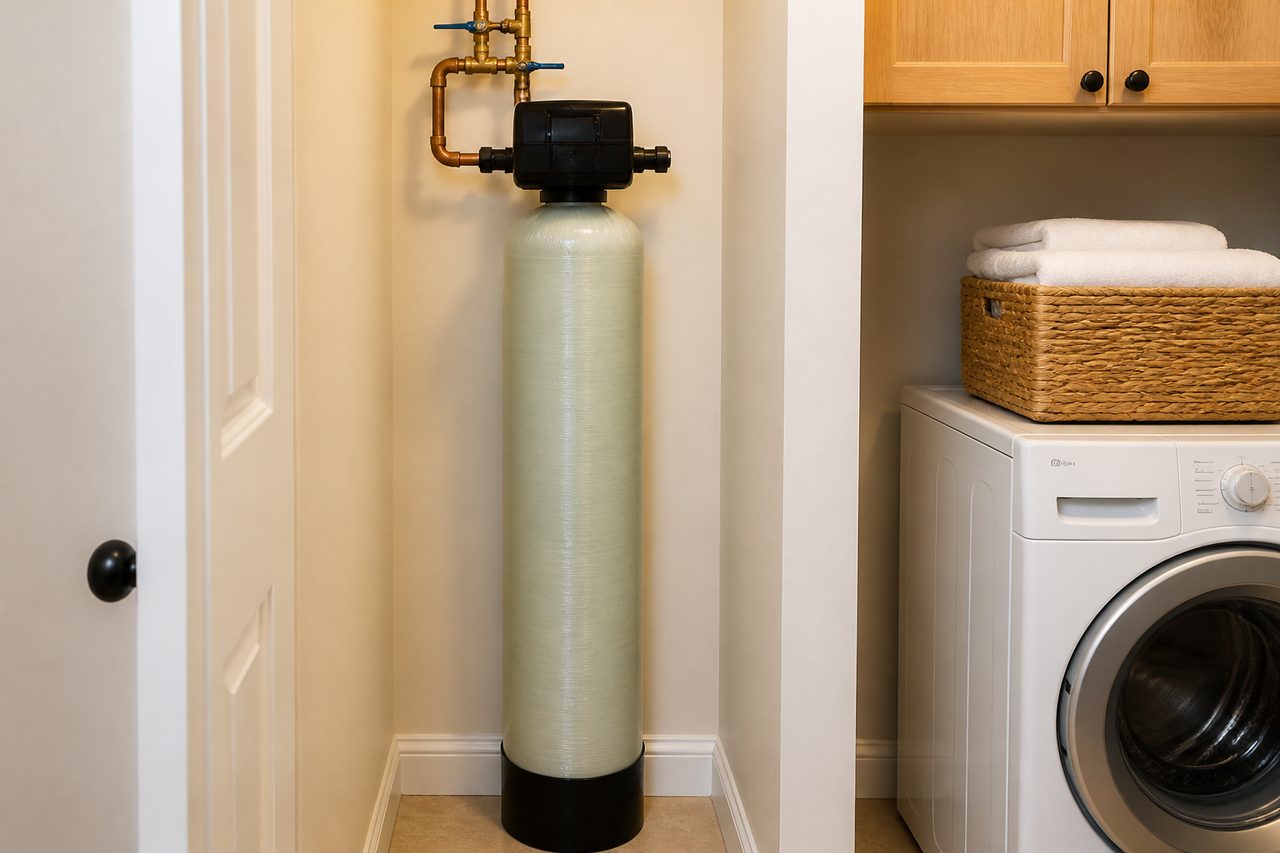
A salt-free conditioner changes how scale sticks. It does not soften. Soap and spots stay closer to untreated. No brine line.
If the shower just smells like the pool
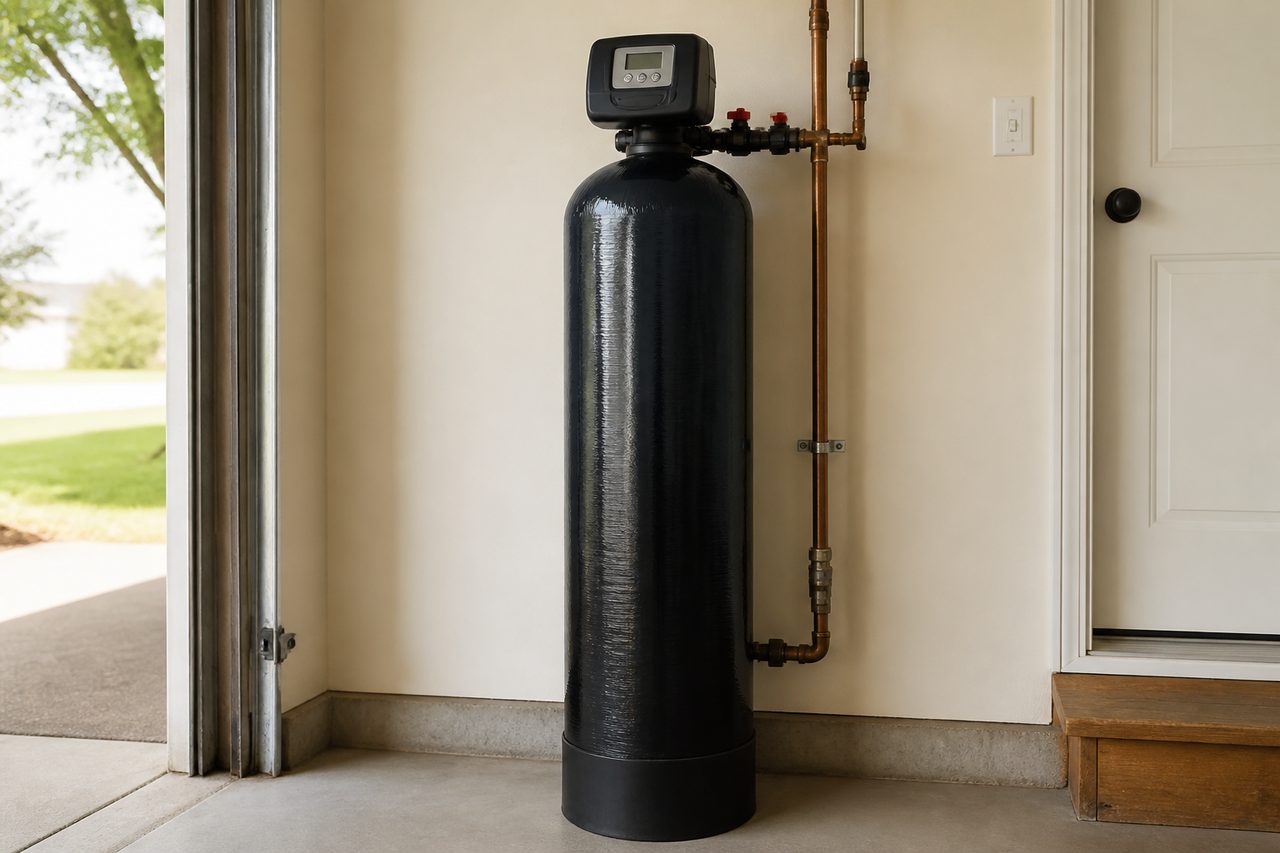
That is chlorine. A whole-house carbon filter with an NSF/ANSI 42 chlorine claim is the usual match. A softener will not take chlorine out.
If you are shopping a PFAS listing for the kitchen
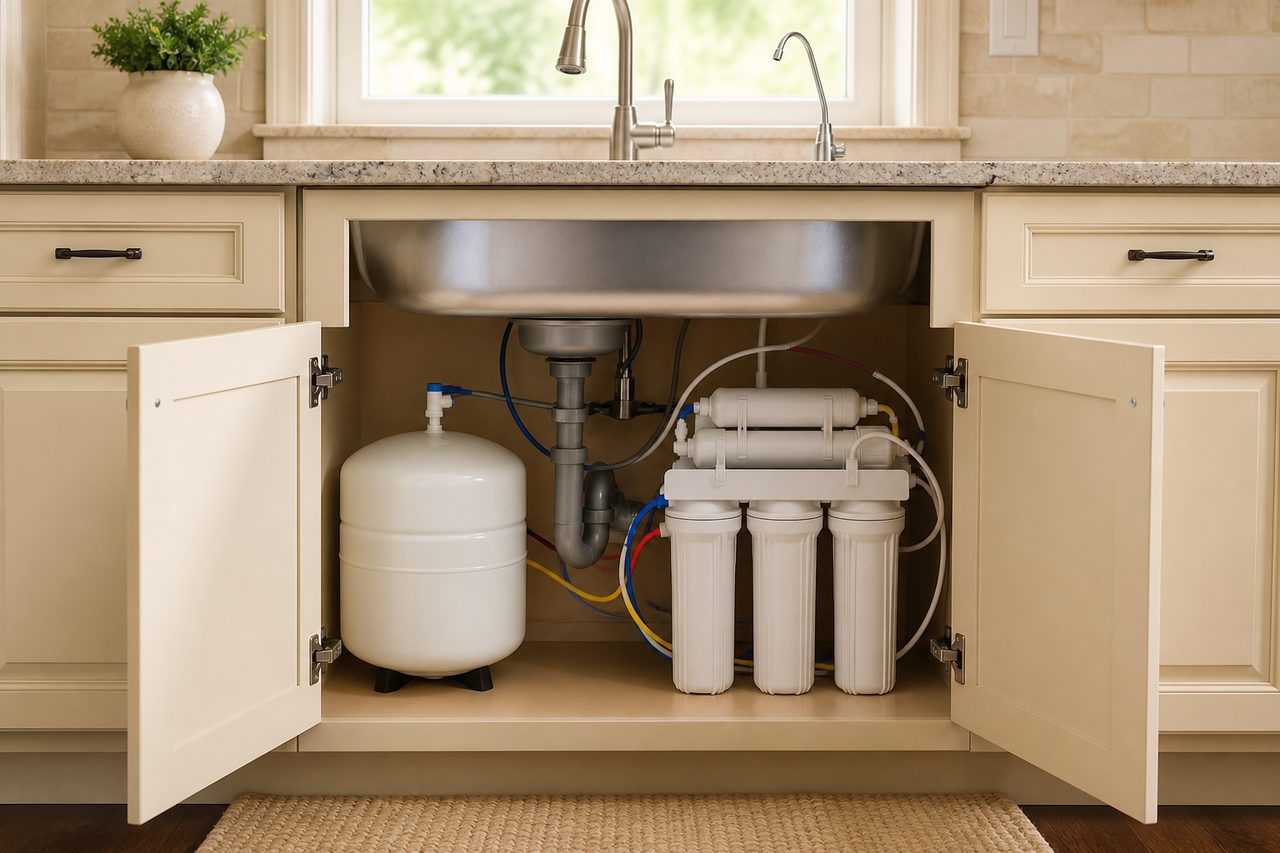
The under-sink RO we actually run is Cloud RO — NSF/ANSI 58, kitchen tap, not a whole-house tank. Check the exact listing if PFAS is why you are shopping. Waterdrop is a tankless option if you want that path. A certifier-listed pitcher is the cheap first step. Nobody is paying for a medical claim.
Shop Cloud ROShop Waterdrop reverse osmosisShop PFAS-listed pitchers
If you have not tested the tap
A homeowner kit is a start. It is not a state-certified lab. Use a certified lab when the decision is expensive.
Sources
- Article XI, §§ 14.01.1100–14.01.1180 (Ord. 12-004; Ord. 08-018) — City of Dixon Municipal Code (eCode360). Accessed 2026-09-02.
- 2024 Consumer Confidence Report (PWS ID CA4810009) — City of Dixon Utilities. Accessed 2026-09-02.
- 2024 Water Quality Report, Dixon District — California Water Service. Accessed 2026-09-02.
Updated September 2, 2026. A city file is chemistry we can cite plus the sewer rule. No invented detections.