Hollister, California
Sunnyslope County Water District Ordinance No. 79 (adopted February 17, 2015) prohibits installing or replacing a Self-Regenerating Water Softening Appliance in the District’s jurisdiction and bars softener waste to the District sewer except as authorized. That is an SSCWD district sewer rule — not a statewide ban. City of Hollister sewer and water are a different agency. The 2024 CCR prints two hardness columns, not a citywide blend.
- Hardness (groundwater)420 mg/L (range 402–432)
- Hardness (surface)120 mg/L (range 110–130)
- Chlorine residual1.75 mg/L (range 0.73–2.16)
- Trihalomethanes31 µg/L (range 7.4–40)
- Haloacetic acids7 µg/L (range 2.1–15)
On the report
- Water utility
- Sunnyslope County Water District
- Hardness
- Groundwater column 420 mg/L as CaCO3 (range 402–432). Surface-water column 120 mg/L (range 110–130). Those are two labeled columns, not a blended citywide number. Sunnyslope County Water District 2024 Annual Water Quality Report. — Sunnyslope County Water District 2024 Annual Water Quality Report
- Disinfectant
- Chlorine residual 1.75 mg/L across all sites (range 0.73–2.16), MRDL 4, 2024 CCR. Chlorine, not chloramine. — Sunnyslope County Water District 2024 Annual Water Quality Report
- Sanitation district
- Sunnyslope County Water District (District sewer)
- Brine / salt to the sewer
- Self-regenerating salt softeners prohibited (district rule). Sunnyslope County Water District Ordinance No. 79 (adopted February 17, 2015), District Water Code Title 1 § 1.05.010 and Title 4 § 4.25.110–120. “Self-Regenerating Water Softening Appliances (SRWS)” means an ion-exchange softener recharged with sodium chloride brine subsequently discharged into the District’s or the City’s sewer system. § 4.25.110 says that except as authorized under the chapter, no person shall allow, permit or cause any water conditioning or softening device of any type to discharge its waste into the District’s sewage system. (A) It is unlawful to install or cause to be installed an SRWS in any structure, built or not, in the District’s jurisdiction; replacement of an existing SRWS is included. (B) All existing SRWS in non-residential structures shall be removed within 120 days of the chapter’s effective date. (C) The District may inspect for compliance; if occupied, staff present credentials and request entry; if refused, every legal remedy to secure entry; inspections are discretionary. § 4.25.120(A) does not apply to softeners recharged by portable cartridges from service providers where the brine is not discharged into the District’s or the City’s sewer. § 4.25.120(B) lets the General Manager permit an individual SRWS only if a physician verifies a medical need for soft water in writing and financial hardship precludes canister service; the District may rescind with 60 days’ notice if it is in violation of State sodium, chloride, or TDS limits. That is an SSCWD district sewer rule — not a statewide ban. City of Hollister sewer is a different agency. Ask SSCWD or the agency on the sewer bill about the address.
Also around here
Extra context besides the utility report and the chart above — geology, an unregulated table, or a published study. Not a second set of printed tap numbers.
- MicroplasticsWHO’s 2019 review examined studies that found microplastic particles in treated tap and bottled water in many places. That is a published-occurrence finding, not a number from this city’s water-quality report, and we do not invent a particles-per-liter count for the tap.Microplastics in drinking-water — World Health Organization
- Lead and copper at the tapThe same 2024 CCR prints customer-tap lead and copper. Copper columns are readable as 40 sites and 0 above the action level. Lead 90th percentile is printed as 2 µg/L with 40 sites sampled; sites-over is not restated here because the PDF column order is ambiguous.Lead 90th percentile 2 µg/L (40 sites sampled), AL 15. Copper 90th percentile 0.082 mg/L (40 sites / 0 above AL 1.3). Narrative says Hollister-area lead and copper results have been below the State Water Board notification level.2024 Annual Water Quality Report — Sunnyslope County Water District
- Other labeled groundwater vs surface columnsThe same 2024 tables print these as two labeled columns, not a citywide blend we invented.TDS groundwater 827 mg/L (range 814–844), surface 270 mg/L (range 250–290), secondary MCL 1,000. Chloride groundwater 135 mg/L (range 114–177), surface 75 mg/L (range 67–83). Sodium groundwater 130 mg/L (range 115–143), surface 53 mg/L (range 49–57).2024 Annual Water Quality Report — Sunnyslope County Water District
- Booklet hardness narrative (not the table)The 2024 booklet also prints a 150–180 ppm / 8.7–10.4 gpg range for years with a normal surface-water allocation. That is narrative, not the table’s two columns, and this file does not put it on the bloom as a citywide blend.Narrative range 150–180 ppm (8.7–10.4 gpg) when the county receives a normal imported-surface allocation.2024 Annual Water Quality Report — Sunnyslope County Water District
- Hexavalent chromiumThe 2024 CCR prints a groundwater Chromium VI row (surface column NA) and a compliance-deferral note. The extracted average and range on that row did not agree, so this file does not invent a number.MCL changed to 10 µg/L in October 2024. Some local wells tested slightly over the new level. A system of this size is not considered in violation until after October 1, 2027. Blending projects are underway.2024 Annual Water Quality Report — Sunnyslope County Water District
- PFASThe 2024 CCR tables we opened do not print a PFAS detection row. This file does not invent one.2024 Annual Water Quality Report — Sunnyslope County Water District
Hollister’s rule on this file is a Sunnyslope County Water District sewer ordinance, not a statewide salt-softener ban. Ordinance No. 79, District Water Code, adopted February 17, 2015. SSCWD potable water serves the eastern half of the Hollister urban area, including Ridgemark and some urban San Benito County — about 7,800 connections in the 2024 report. SSCWD also supplies treated surface water to the City of Hollister Water Utility, which keeps its own distribution. City of Hollister sewer is a different agency. We did not open a primary City of Hollister municipal-code softener section tonight; secondary news says the city also adopted a ban in 2014 — confirm that with City Public Works. Ask SSCWD or the agency printed on the water and sewer bill about the address.
Title 1 § 1.05.010: “Self-Regenerating Water Softening Appliances (SRWS)” means an ion-exchange device that removes calcium and magnesium using sodium chloride; the resin is recharged with sodium chloride brine subsequently discharged into the District’s or the City’s sewer system. Units may recharge on a timer or a sensor.
§ 4.25.110: except as authorized under the chapter, no person shall allow, permit or cause any water conditioning or softening device of any type to discharge its waste or waste products into the District’s sewage system. (A) It is unlawful to install or cause to be installed an SRWS in any structure, whether fully constructed or not, in the District’s jurisdiction; replacement of an existing SRWS is included. (B) All existing SRWS in non-residential structures shall be removed within 120 days of the chapter’s effective date. (C) The District may inspect for compliance. If the building is occupied, staff present credentials and request entry; if entry is refused, the District may use every legal remedy to secure it. Inspections are discretionary; the District is not liable for an inadequate inspection or a failure to inspect.
§ 4.25.120 exceptions: (A) the chapter does not apply to softeners recharged by portable cartridges supplied by service providers where the brine is not discharged into the District’s or the City’s sewer system. (B) The General Manager may permit an individual SRWS if a physician verifies a medical need for soft water in writing and financial hardship precludes canister softener service; that permission may be rescinded with 60 days’ written notice if the District is in violation of State sodium, chloride, or TDS limits. Appeals go to the Board under Chapter 1.25. We do not invent another exception, and we do not make a medical claim about tap water.
Drinking water on this file is Sunnyslope County Water District. The 2024 Annual Water Quality Report does not print a PWS ID on the pages we opened, so this file does not invent one. 2024 blend narrative: 83 percent imported surface water and 17 percent groundwater. Lessalt and West Hills treat imported Central Valley Project surface water; five wells supply the groundwater. The tables print two labeled hardness columns — groundwater 420 mg/L as CaCO3 (range 402–432) and surface water 120 mg/L (range 110–130). We do not invent a citywide blend.
Same 2024 tables: chlorine residual 1.75 mg/L across all sites (range 0.73–2.16), MRDL 4. Trihalomethanes 31 µg/L (range 7.4–40), MCL 80. Haloacetic acids 7 µg/L (range 2.1–15), MCL 60. Customer-tap copper 90th percentile 0.082 mg/L (40 sites / 0 above AL 1.3). Customer-tap lead 90th percentile 2 µg/L (40 sites sampled), AL 15; the Hollister-area narrative says those lead and copper results have been below the notification level. The Chromium VI groundwater row is on the table (surface column NA); the extracted average and range did not agree, so this file keeps the October 2024 MCL of 10 µg/L and the note that a system of this size is not in violation until after October 1, 2027. The 2024 tables we opened do not print a PFAS detection row. This file does not invent one. Kitchen shopping stays the Cloud RO / Waterdrop path already used on other cities if a listing is why you are looking.
What actually fits
Some links are affiliate links. If you buy through one, we may earn a commission. That does not change the match, and it is not a medical claim.
As an Amazon Associate we earn from qualifying purchases.
If you want actual soft water
Portable-exchange tanks, if that exception applies at your address. The resin still removes hardness. The salt work happens off site. Do not install a self-regenerating unit to the sewer here.
If you only want less scale and you hate salt bags
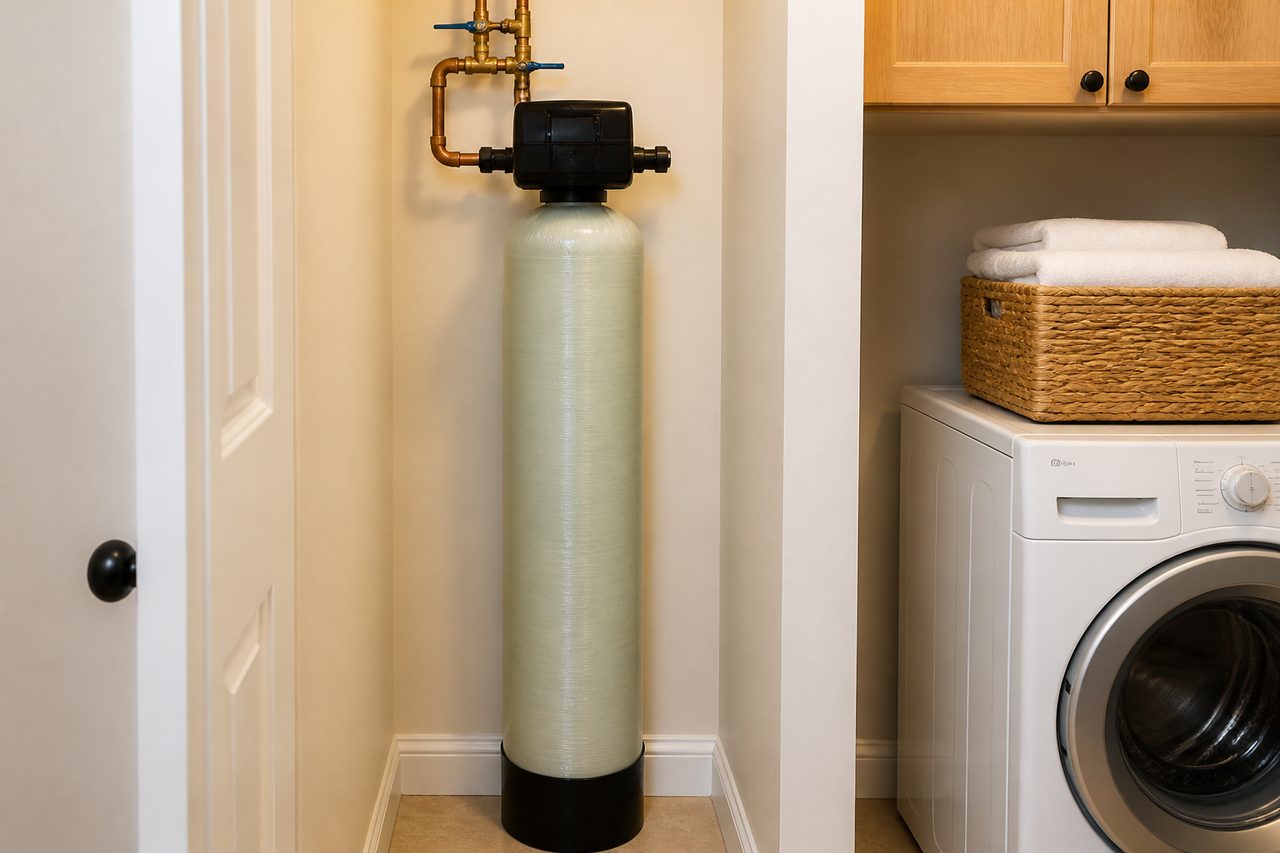
A salt-free conditioner changes how scale sticks. It does not soften. Soap and spots stay closer to untreated. No brine line.
If the shower just smells like the pool
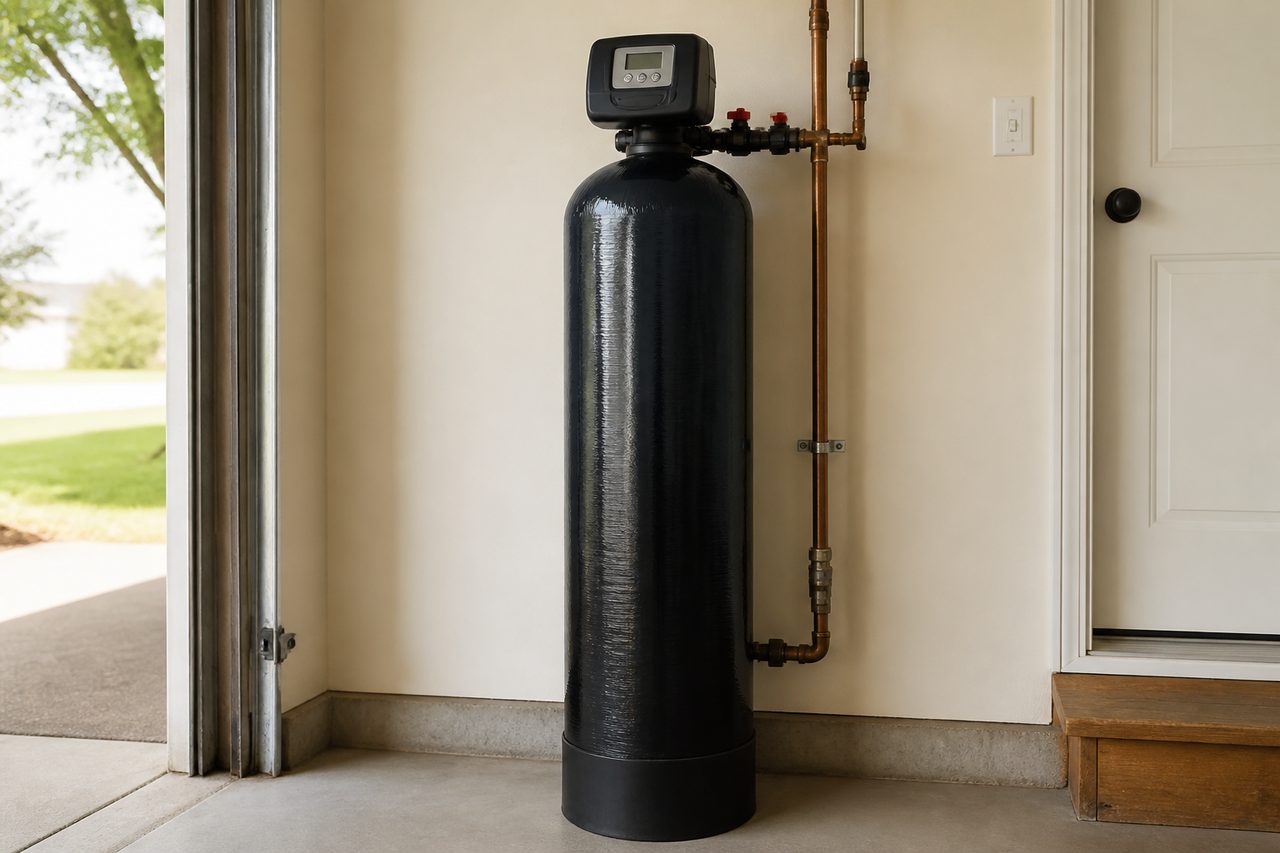
That is chlorine. A whole-house carbon filter with an NSF/ANSI 42 chlorine claim is the usual match. A softener will not take chlorine out.
If you are shopping a PFAS listing for the kitchen
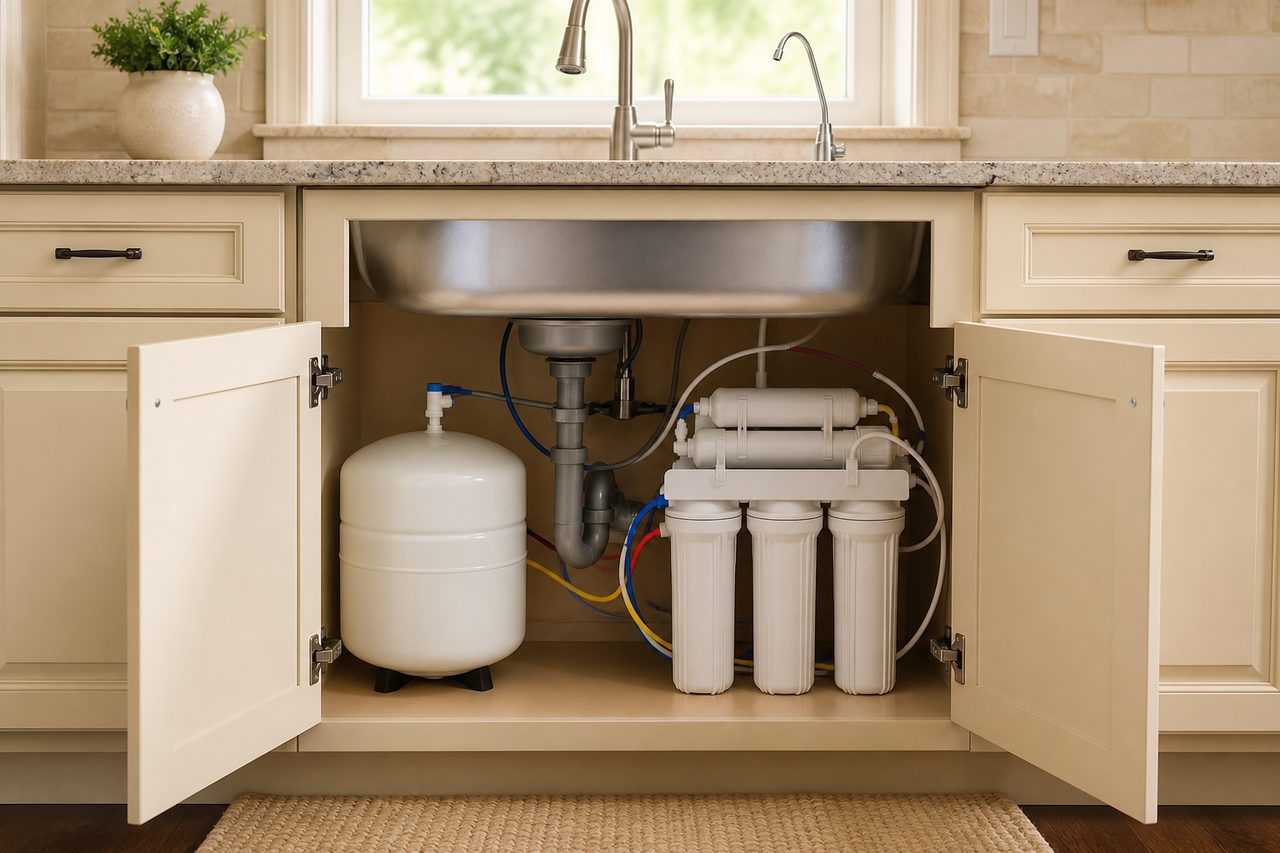
The under-sink RO we actually run is Cloud RO — NSF/ANSI 58, kitchen tap, not a whole-house tank. Check the exact listing if PFAS is why you are shopping. Waterdrop is a tankless option if you want that path. A certifier-listed pitcher is the cheap first step. Nobody is paying for a medical claim.
Shop Cloud ROShop Waterdrop reverse osmosisShop PFAS-listed pitchers
If you have not tested the tap
A homeowner kit is a start. It is not a state-certified lab. Use a certified lab when the decision is expensive.
Sources
- District Water Code, Ordinance No. 79 (adopted February 17, 2015), § 4.25.110–120 — Sunnyslope County Water District. Accessed 2026-09-07.
- Ordinances (Ordinance No. 79 listing) — Sunnyslope County Water District. Accessed 2026-09-07.
- 2024 Annual Water Quality Report — Sunnyslope County Water District. Accessed 2026-09-07.
Updated September 7, 2026. A city file is chemistry we can cite plus the sewer rule. No invented detections.