Lathrop, California
Lathrop Municipal Code Chapter 13.05 (Ord. 08-278) prohibits installing self-regenerating water softeners that regenerate with on-site brine in the water recycling plant service area — currently west of Interstate 5 plus Lathrop Acres, and sewers tributary to that plant. Drinking water is a blend of city wells treated at Louise Avenue and South San Joaquin Irrigation District surface water. The 2024 report prints hardness as two columns, not a citywide number.
- Chlorine residual0.8 ppm (range 0.2–1.2)
- Iron (distribution, combined)60 ppb (range ND–60)
On the report
- Water utility
- City of Lathrop Public Works
- Hardness
- SSJID treated surface water 34 ppm as CaCO3; city wells (raw) 196 ppm (range 164–240). Combined distribution hardness is not printed. 2024 Water Quality Report. — City of Lathrop 2024 Water Quality Report
- Disinfectant
- Chlorine residual 0.8 ppm (range 0.2–1.2) in the combined distribution system, 2024 report — City of Lathrop 2024 Water Quality Report
- Sanitation district
- City of Lathrop (water recycling plant / POTW)
- Brine / salt to the sewer
- Self-regenerating salt softeners prohibited (district rule). City of Lathrop Municipal Code Chapter 13.05 (Ord. 08-278) prohibits installing self-regenerating water softeners that regenerate with on-site brine in the water recycling plant service area (currently west of I-5 plus Lathrop Acres) and sewers tributary to that plant. Ask Public Works which sewer the address actually hits.
Also around here
Extra context besides the utility report and the chart above — geology, an unregulated table, or a published study. Not a second set of printed tap numbers.
- MicroplasticsWHO’s 2019 review examined studies that found microplastic particles in treated tap and bottled water in many places. That is a published-occurrence finding, not a number from this city’s water-quality report, and we do not invent a particles-per-liter count for the tap.Microplastics in drinking-water — World Health Organization
- ArsenicThe same 2024 CCR prints arsenic on LAWTF-treated groundwater, not as a combined distribution blend.7.7 ppb (range 6–12), MCL 10, violation column No — LAWTF-treated groundwater on that table, not a citywide tap average.2024 Water Quality Report (PWS ID 3910015) — City of Lathrop Public Works
- PFOSThe 2024 CCR unregulated table prints PFOS in the distribution system. That is an extra table on the same report, not a citywide tap average we invented.15 ppt (range 13–17) on the unregulated table — that source’s printed result, not a blended hardness number.2024 Water Quality Report (PWS ID 3910015) — City of Lathrop Public Works
- NitrateThe Central Valley Water Board’s CV-SALTS program exists because elevated nitrate and salinity in valley groundwater are a documented regional problem. That is basin groundwater, not a number we copied as this city’s tap average.Central Valley Salinity Alternatives for Long-Term Sustainability (CV-SALTS) — Central Valley Regional Water Quality Control Board
Lathrop’s rule is a city ordinance for the water recycling plant service area, not a statewide salt-softener ban. Under California Health and Safety Code Chapter 5, Part 12, Division 104, the city adopted Chapter 13.05 (Ord. 08-278) as a salinity control after it could not meet the TDS standard in Central Valley Regional Board waste discharge requirements Order No. R5-2006-0094.
§13.05.030: no person shall install, or assist in installing, a residential or nonresidential self-regenerating water softening appliance within the water recycling plant service area or any community sewer tributary to that plant. As written, that service area is currently the portion of the city west of Interstate 5, plus Lathrop Acres. East of I-5 and other sewer sheds are not that sentence. Ask Public Works which sewer the address actually hits. Violation is a misdemeanor: fine not to exceed $1,000, imprisonment not to exceed 30 days, or both.
The ordinance regulates a residential self-regenerating appliance that applies a chloride- or salt-containing brine on site, then rinses. A portable-exchange tank that discharges no brine on site is a different machine under that definition. The published chapter does not add an exception sentence. Ask Public Works whether that machine is allowed at the address.
Drinking water comes from four online city wells treated at the Louise Avenue water treatment facility (coagulation and filtration for arsenic) plus South San Joaquin Irrigation District surface water treated at DeGroot WTP near Woodward Reservoir. The 2024 Water Quality Report prints hardness as two columns — SSJID treated surface water 34 ppm as CaCO3, city wells (raw) 196 ppm (range 164–240). Combined distribution hardness is printed NA. We do not invent a citywide grains-per-gallon or a blended number.
Chlorine residual in the combined distribution system: 0.8 ppm (range 0.2–1.2), MRDL 4.0 as Cl2. That is chlorine, not chloramine. Iron in the combined distribution: 60 ppb (range ND–60), SMCL 300. LAWTF-treated groundwater arsenic: 7.7 ppb (range 6–12), MCL 10, violation column No. Unregulated table: PFOS in distribution 15 ppt (range 13–17). Kitchen match stays NSF/ANSI 53 or 58 listing language already used on other cities — we do not invent a certified model.
What actually fits
Some links are affiliate links. If you buy through one, we may earn a commission. That does not change the match, and it is not a medical claim.
As an Amazon Associate we earn from qualifying purchases.
If you want actual soft water
Portable-exchange tanks, if that exception applies at your address. The resin still removes hardness. The salt work happens off site. Do not install a self-regenerating unit to the sewer here.
If you only want less scale and you hate salt bags
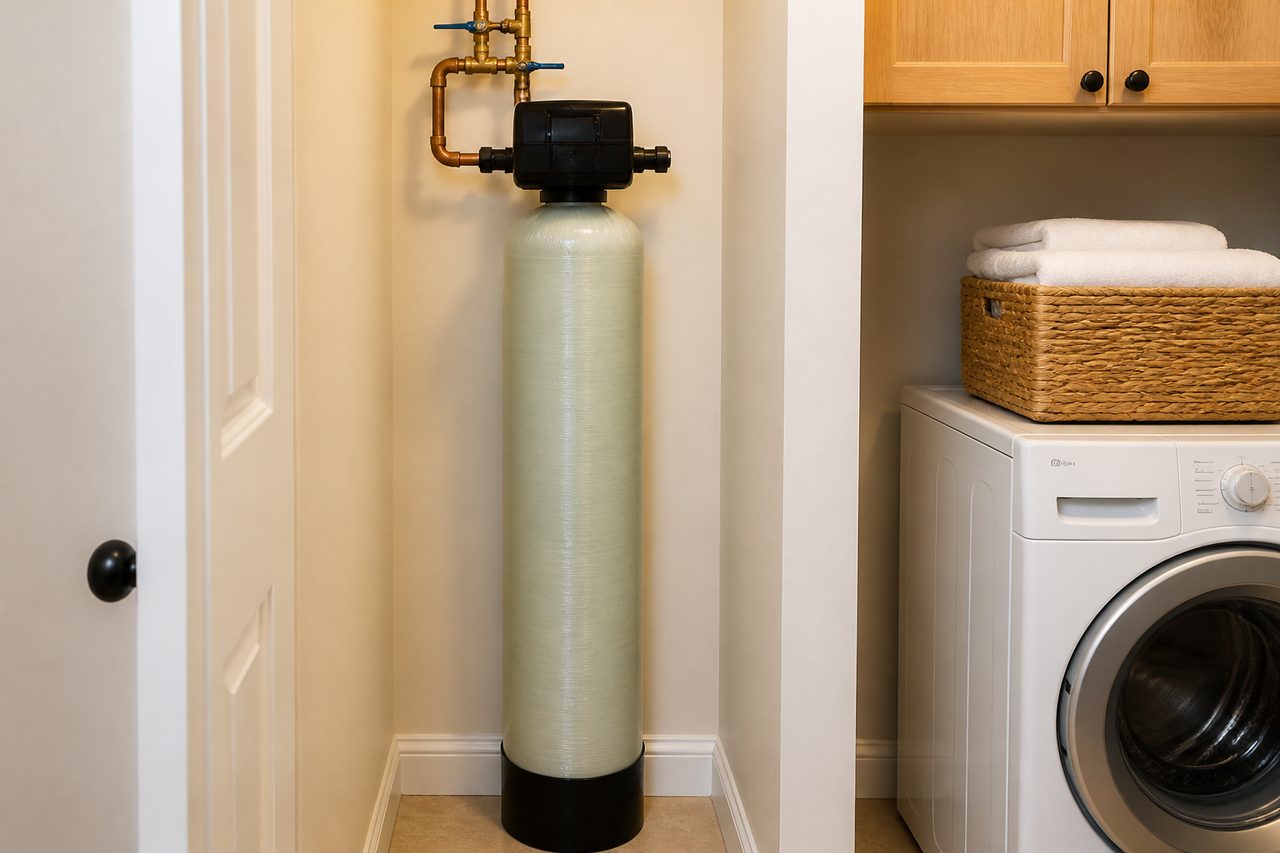
A salt-free conditioner changes how scale sticks. It does not soften. Soap and spots stay closer to untreated. No brine line.
If the shower just smells like the pool
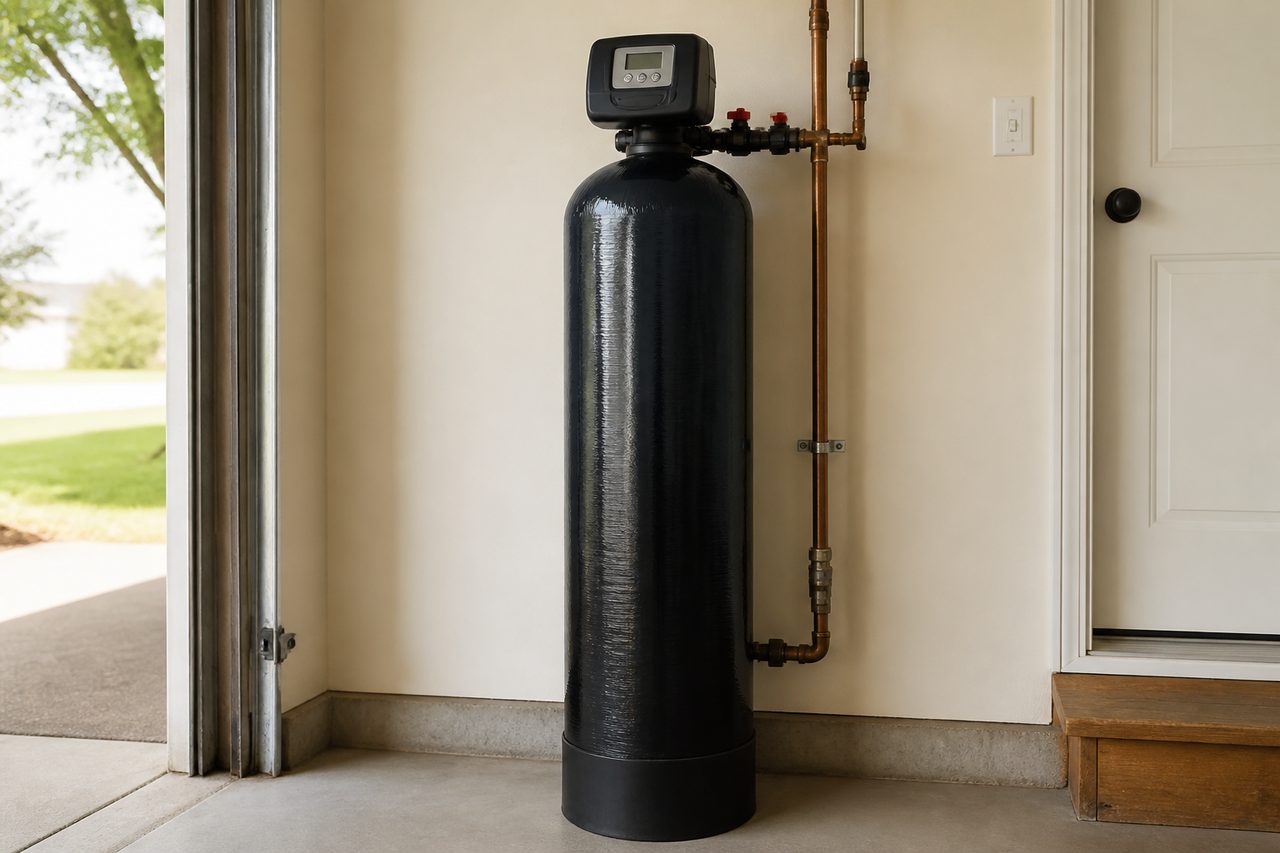
That is chlorine. A whole-house carbon filter with an NSF/ANSI 42 chlorine claim is the usual match. A softener will not take chlorine out.
If you are shopping a PFAS listing for the kitchen
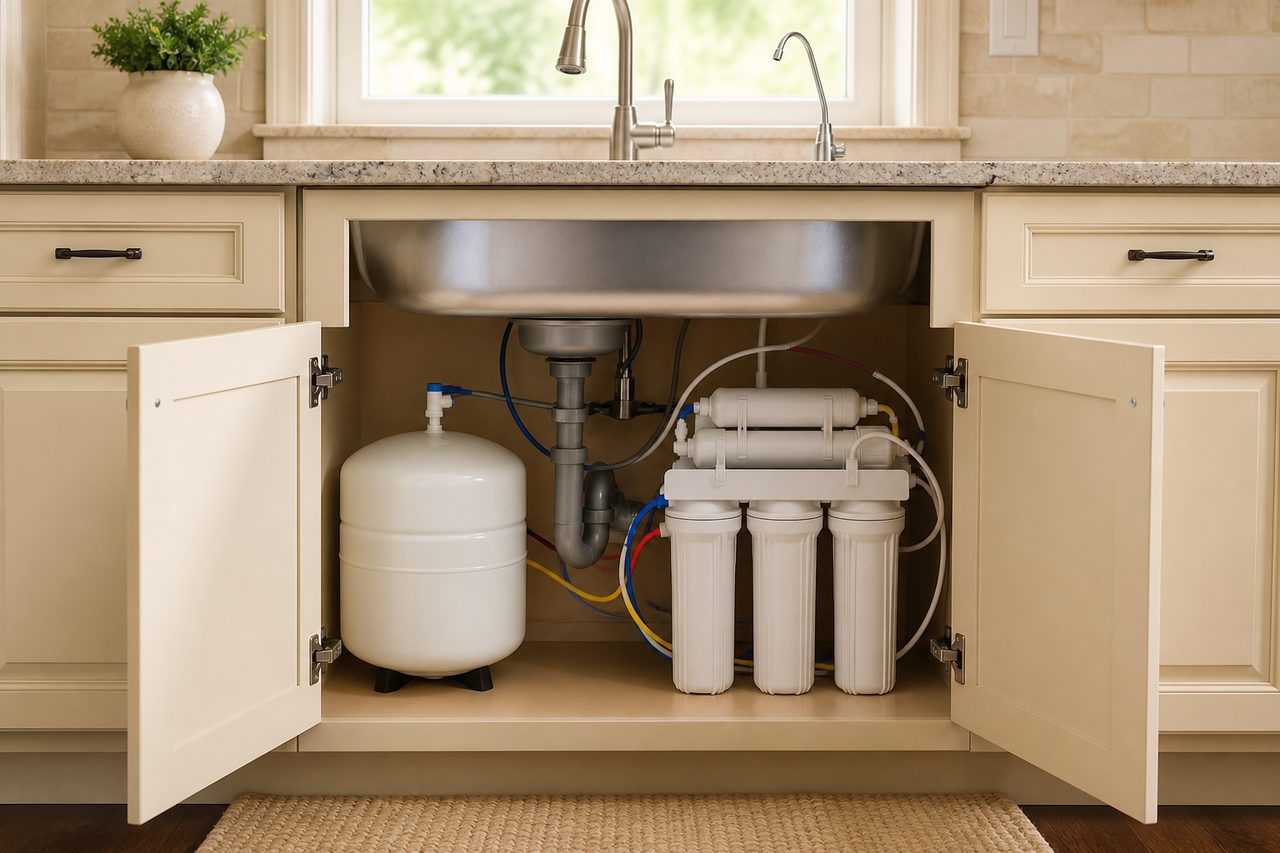
The under-sink RO we actually run is Cloud RO — NSF/ANSI 58, kitchen tap, not a whole-house tank. Check the exact listing if PFAS is why you are shopping. Waterdrop is a tankless option if you want that path. A certifier-listed pitcher is the cheap first step. Nobody is paying for a medical claim.
Shop Cloud ROShop Waterdrop reverse osmosisShop PFAS-listed pitchers
If you have not tested the tap
A homeowner kit is a start. It is not a state-certified lab. Use a certified lab when the decision is expensive.
Sources
- Chapter 13.05 Water Softening Appliances (Ord. 08-278) — City of Lathrop Municipal Code (eCode360). Accessed 2026-08-31.
- 2024 Water Quality Report (PWS ID 3910015) — City of Lathrop Public Works. Accessed 2026-08-31.
Updated August 31, 2026. A city file is chemistry we can cite plus the sewer rule. No invented detections.