Oceanside, California
City of Oceanside 2024 Water Quality Report. Total hardness prints as labeled source columns — averages 245 / 234 / 242 / 68.1 mg/L (desal 3.5–4.4 gpg). Chloramines 2.6 ppm highest RAA (range 0.2–3.8). No Measure S-style residential softener ban ordinance opened — check the sewer agency on the bill.
- Hardness (imported columns)234–245 mg/L (range 170–310)
- Hardness (desal column)68.1 mg/L (range 60.4–75.2)
- Chloramines2.6 mg/L highest RAA (range 0.2–3.8)
Best match for Oceanside
Salt-based water softener — confirm the district first
Check the sanitation district before installing a salt system.
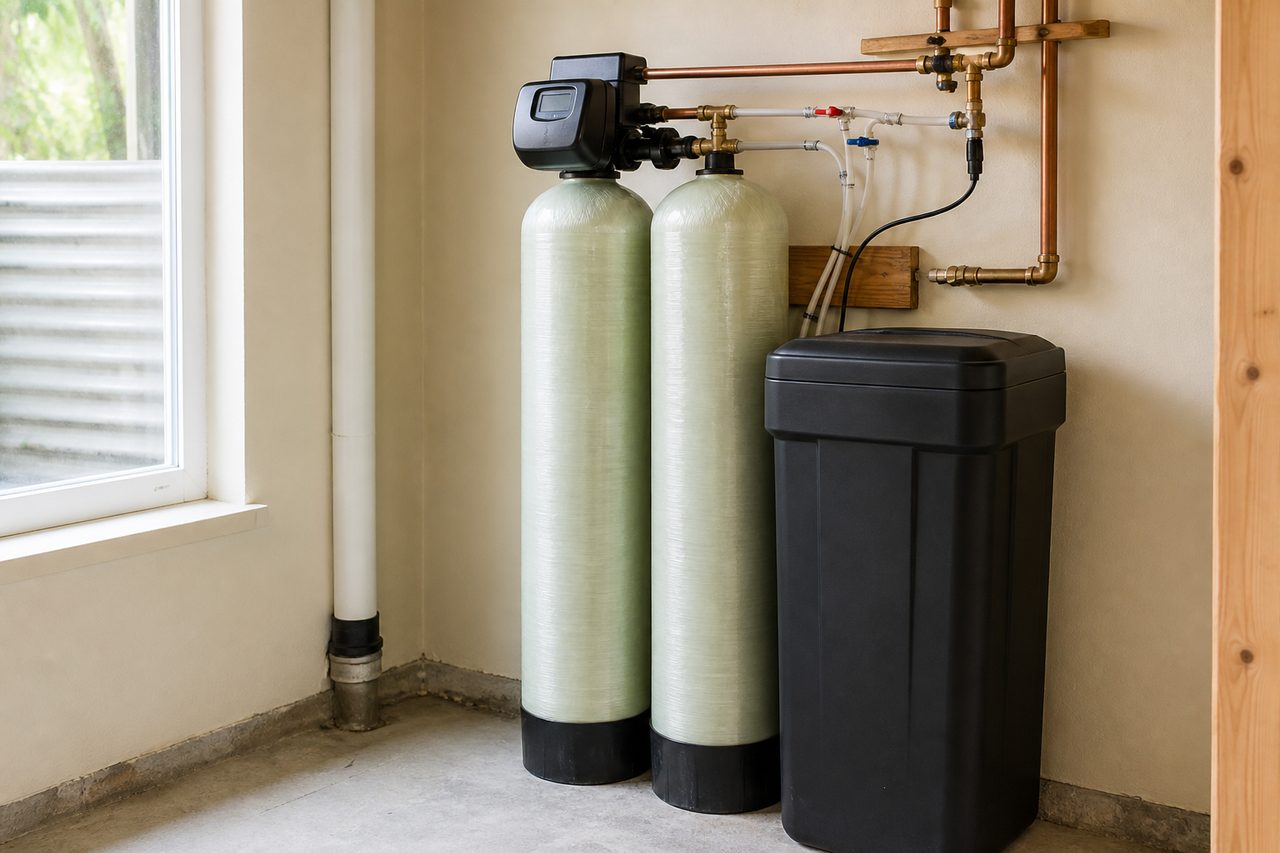
Ask the agency on the sewer side of the bill before you cut a brine drain. California lets districts restrict self-regenerating units. A “banned in California” blog is not your district.
Some links are affiliate links. If you buy through one, we may earn a commission. That does not change the match, and it is not a medical claim.
As an Amazon Associate we earn from qualifying purchases.
Other options that still fit
Salt-free conditioner
A salt-free conditioner changes how scale sticks. It does not soften. Soap and spots stay closer to untreated. No brine line.
Whole-house catalytic carbon for chloramine
Catalytic carbon with a chloramine claim (NSF/ANSI 42 for chloramine). Regular chlorine carbon is the wrong box.
Under-sink reverse osmosis
The under-sink RO we actually run is Cloud RO — NSF/ANSI 58, kitchen tap, not a whole-house tank. Check the exact listing if PFAS is why you are shopping. Shop Amazon first for under-sink RO, or buy Cloud direct. Waterdrop is a tankless option if you want that path. A certifier-listed pitcher is the cheap first step. Nobody is paying for a medical claim.
Shop under-sink reverse osmosisBuy Cloud RO directShop Waterdrop reverse osmosisShop PFAS-listed pitchers
Test the tap first
A homeowner kit is a start. It is not a state-certified lab. Use a certified lab when the decision is expensive.
On the report
- Water utility
- City of Oceanside Water Utilities
- Hardness
- Total hardness as CaCO3 on the 2024 secondary table prints labeled source-column averages 245 / 234 / 242 / 68.1 mg/L (ranges 170–310, 220–260, 242–243, 60.4–75.2). The same rows also print grains-per-gallon ranges 9.9–18, 12–15, 14.1–14.2, and 3.5–4.4. One source column is NA. Those are printed columns — Weese / imported / Carlsbad desal among them — not a blend we invented. 2024 Water Quality Report. — City of Oceanside 2024 Water Quality Report
- Disinfectant
- Total chlorine distribution-system range 0.2–3.8 mg/L, highest RAA 2.6. MRDL 4.0. Footnote and narrative say the City uses chloramines for disinfection from each source. 2024 report. — City of Oceanside 2024 Water Quality Report
- Brine / salt to the sewer
- Check the sanitation district before installing. No City of Oceanside residential self-regenerating softener ban like LACSD Measure S turned up. That is not a statewide ban finding. Ask the sewer agency on the bill before you cut a brine drain.
Also around here
Extra context besides the utility report and the chart above — geology, an unregulated table, or a published study. Not a second set of printed tap numbers.
- MicroplasticsWHO’s 2019 review examined studies that found microplastic particles in treated tap and bottled water in many places. That is a published-occurrence finding, not a number from this city’s water-quality report, and we do not invent a particles-per-liter count for the tap.Microplastics in drinking-water — World Health Organization
- Other 2024 table numbersThe same 2024 report prints these as labeled distribution results, not a blend we invented.TTHMs distribution range 13–68 µg/L, highest LRAA 51. HAA5 range 5.0–26 µg/L, highest LRAA 20.2024 Water Quality Report — City of Oceanside Water Utilities
Oceanside drinking water is Weese-treated imported surface water, purchased SDCWA water blended with Carlsbad desal, and Mission Basin RO groundwater. No City of Oceanside residential softener ban like LACSD Measure S turned up. Ask the sewer agency on the bill before you cut a brine drain. This is not a legal opinion and not a statewide ban.
The 2024 table prints total hardness as labeled source columns — averages 245 / 234 / 242 / 68.1 mg/L (ranges 170–310, 220–260, 242–243, 60.4–75.2; also 9.9–18 / 12–15 / 14.1–14.2 / 3.5–4.4 gpg). We do not invent a citywide blend.
Chloramines 2.6 mg/L highest RAA (range 0.2–3.8). Kitchen shopping stays the Cloud RO / Waterdrop path already used on other cities if a listing is why you are looking.
Sources
- 2024 Water Quality Report — City of Oceanside Water Utilities. Accessed 2026-09-09.
Updated September 9, 2026. A city file is chemistry we can cite plus the sewer rule. No invented detections.