Omaha, Nebraska
Metropolitan Utilities District 2025 Water Quality Report. Florence, Platte West, and Platte South plants. Hardness (total) as CaCO3 average 112 ppm (range 29–159) on the mineral chart. Residual is chloramines. No Measure S-style residential softener ban turned up.
- Hardness112 ppm (range 29–159)
- Chloraminesused in treatment
- TTHMs44.4 ppb (range 26.5–74.1)
- HAA520.2 ppb (range 8.64–33.3)
Best match for Omaha
Salt-based water softener
No district prohibition on a brine drain turned up in the current file.
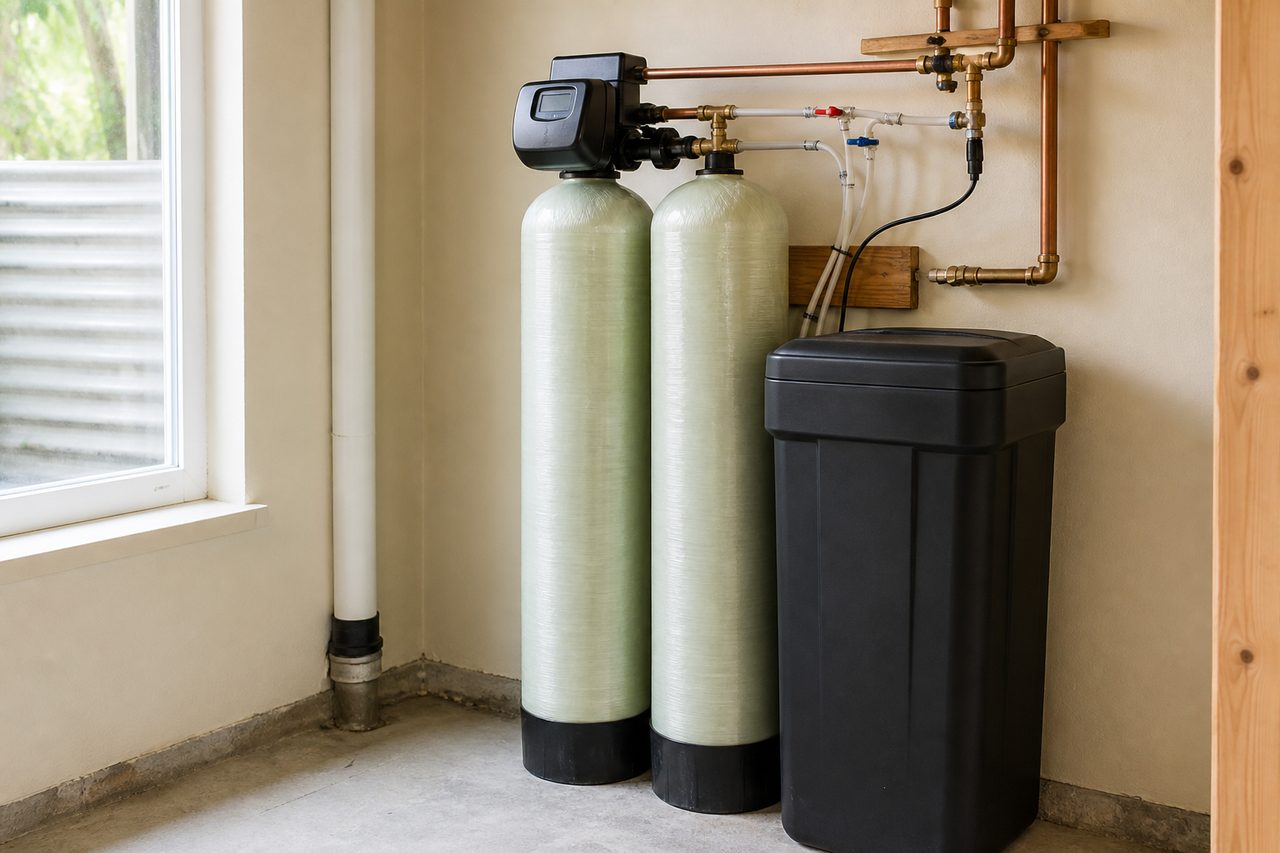
A salt-based softener is the thing that actually removes hardness. Size it from your grains and how much water you use, not bathroom count. It needs a drain.
Some links are affiliate links. If you buy through one, we may earn a commission. That does not change the match, and it is not a medical claim.
As an Amazon Associate we earn from qualifying purchases.
Other options that still fit
Salt-free conditioner
A salt-free conditioner changes how scale sticks. It does not soften. Soap and spots stay closer to untreated. No brine line.
Whole-house catalytic carbon for chloramine
Catalytic carbon with a chloramine claim (NSF/ANSI 42 for chloramine). Regular chlorine carbon is the wrong box.
Under-sink reverse osmosis
The under-sink RO we actually run is Cloud RO — NSF/ANSI 58, kitchen tap, not a whole-house tank. Check the exact listing if PFAS is why you are shopping. Shop Amazon first for under-sink RO, or buy Cloud direct. Waterdrop is a tankless option if you want that path. A certifier-listed pitcher is the cheap first step. Nobody is paying for a medical claim.
Shop under-sink reverse osmosisBuy Cloud RO directShop Waterdrop reverse osmosisShop PFAS-listed pitchers
Test the tap first
A homeowner kit is a start. It is not a state-certified lab. Use a certified lab when the decision is expensive.
On the report
- Water utility
- Metropolitan Utilities District
- Hardness
- Hardness (total) as CaCO3 average 112 ppm, range 29–159, on the 2025 unregulated mineral-analysis chart. Those are the printed average and range on that chart — not a third-plant number we invented. — Metropolitan Utilities District 2025 Water Quality Report
- Disinfectant
- Narrative states M.U.D. uses chloramines in the water treatment process. A separate residual-ppm average was not a clean printed number we could quote from the chart pages. Printed as chloramines, not a second disinfectant we invented. — Metropolitan Utilities District 2025 Water Quality Report
- Brine / salt to the sewer
- No district prohibition found in current research. Searched M.U.D. and City of Omaha sewer pages and codes for a residential self-regenerating softener or brine-drain ban like LACSD Measure S. None turned up. Ask the sewer agency on the bill before you cut a brine drain.
Also around here
Extra context besides the utility report and the chart above — geology, an unregulated table, or a published study. Not a second set of printed tap numbers.
- MicroplasticsWHO’s 2019 review examined studies that found microplastic particles in treated tap and bottled water in many places. That is a published-occurrence finding, not a number from this city’s water-quality report, and we do not invent a particles-per-liter count for the tap.Microplastics in drinking-water — World Health Organization
- PFASEPA’s Fifth Unregulated Contaminant Monitoring Rule required community systems this size to test 29 PFAS and lithium in 2023–2025. Open the UCMR 5 Data Finder for this PWS. This file does not invent a detection.Fifth Unregulated Contaminant Monitoring Rule — U.S. Environmental Protection Agency
Omaha drinking water is treated at Florence, Platte West, and Platte South and delivered by Metropolitan Utilities District. No M.U.D. or City of Omaha residential softener ban like LACSD Measure S turned up. Ask the sewer agency on the bill before you cut a brine drain. This is not a legal opinion.
The 2025 Water Quality Report mineral-analysis chart prints hardness (total) as CaCO3 112 ppm average (range 29–159). We do not invent a grains number that chart did not print as a clean labeled figure.
Residual disinfectant is chloramines, as printed in the treatment narrative. TTHMs 44.4 ppb (range 26.5–74.1). HAA5 20.2 ppb (range 8.64–33.3). Kitchen shopping stays the Cloud RO / Waterdrop path already used on other cities if a listing is why you are looking.
Sources
- 2025 Water Quality Report — Metropolitan Utilities District. Accessed 2026-09-09.
Updated September 9, 2026. A city file is chemistry we can cite plus the sewer rule. No invented detections.