Ontario, California
Ontario Municipal Code § 6-7.206 (Ord. 2755, as amended by Ord. 3190) does not permit installing, replacing, or enlarging a self-regenerating water softening appliance that discharges to a community sewer tributary to the IEUA regional sewerage system. That is a city sewer rule implementing IEUA Ordinance § 2.6 — not a statewide ban. The 2025 CCR prints hardness as labeled columns, not a citywide blend.
- Hardness (local groundwater)124 ppm (range 82–150)
- Hardness (imported WFA/SAWCO)91 ppm (range 85–99)
- Total chlorine0.95 ppm (range ND–2.1)
- TTHMs47 ppb LRAA (range ND–65)
- HAA59.0 ppb LRAA (range ND–15)
On the report
- Water utility
- Ontario Municipal Utilities Company
- Hardness
- Local groundwater 124 ppm as CaCO3 (range 82–150). Imported water (WFA w/ SAWCO) 91 ppm (range 85–99). Purchased-groundwater columns print separately (JCSD 177, CDA 1 137, CDA 2 140). Combined citywide hardness is not printed. 2025 CCR. — Ontario Municipal Utilities Company 2025 Consumer Confidence Report
- Disinfectant
- Total chlorine residual (chloramines and free chlorine) 0.95 ppm (range ND–2.1) on the 2025 distribution-system table. The booklet also tells dialysis and aquarium customers to remove chloramines. — Ontario Municipal Utilities Company 2025 Consumer Confidence Report
- Sanitation district
- Inland Empire Utilities Agency / City of Ontario sewer
- Brine / salt to the sewer
- Self-regenerating salt softeners prohibited (district rule). Ontario Municipal Code § 6-7.206 (Ord. 2755, effective April 4, 2002, as amended by Ord. 3190, effective October 7, 2021) says the installation, replacement, or enlargement of any self-regenerating water softening appliance which discharges into the community sewer system that is tributary to the regional sewerage system is not permitted. The section does not apply to a portable-exchange water softener regenerated off-site at a lawfully regulated location. IEUA Ordinance § 2.6 says the same regional restriction and that each contracting agency shall adopt a local ordinance. That is an Ontario / IEUA sewer rule — not a statewide ban. Ask OMUC or the agency on the sewer bill about the address.
Also around here
Extra context besides the utility report and the chart above — geology, an unregulated table, or a published study. Not a second set of printed tap numbers.
- MicroplasticsWHO’s 2019 review examined studies that found microplastic particles in treated tap and bottled water in many places. That is a published-occurrence finding, not a number from this city’s water-quality report, and we do not invent a particles-per-liter count for the tap.Microplastics in drinking-water — World Health Organization
- Purchased-groundwater hardness columnsA second 2025 source-water table prints three purchased-groundwater columns. Those are not a blend with the local-groundwater / imported pair above.JCSD (870 Zone) 177 ppm (range 130–210). CDA 1 (870 Zone) 137 ppm (range 25–220). CDA 2 (1110 Zone) 140 ppm (range 110–200).2025 Consumer Confidence Report — Ontario Municipal Utilities Company
- PFAS on the local-groundwater columnThe 2025 local-groundwater source table prints PFAS rows. Those are labeled source-water results, not a citywide tap average we invented.Local groundwater PFHxS 0.23 ppt (range ND–3.5). PFHxA 0.18 ppt (range ND–3.4). PFOA 0.27 ppt (range ND–4.0). PFPeA 0.48 ppt (range ND–3.8).2025 Consumer Confidence Report — Ontario Municipal Utilities Company
Ontario’s sewer rule is a city code section implementing an IEUA regional restriction, not a statewide salt-softener ban. § 6-7.206 (Ord. 2755, effective April 4, 2002, as amended by Ord. 3190, effective October 7, 2021): the installation, replacement, or enlargement of any self-regenerating water softening appliance which discharges into the community sewer system that is tributary to the regional sewerage system is not permitted. The section does not apply to a portable-exchange water softener of the type regenerated off-site at a lawfully regulated location. IEUA may offer a voluntary rebate for removal of an operational unit. IEUA Ordinance § 2.6 says the same regional restriction and that each contracting agency shall adopt a local ordinance. Ask OMUC or the agency on the sewer bill about the address.
Drinking water in 2025 came from city wells (local groundwater), San Antonio Water Company wells, imported water through the Water Facilities Authority, and purchased groundwater (JCSD / CDA zones). The 2025 Consumer Confidence Report prints hardness as labeled columns. Local groundwater 124 ppm as CaCO3 (range 82–150). Imported water (WFA w/ SAWCO) 91 ppm (range 85–99). Purchased-groundwater hardness is on a separate table. We do not invent a citywide blend.
Distribution system, 2025: total chlorine residual (chloramines and free chlorine) 0.95 ppm (range ND–2.1). HAA5 highest LRAA 9.0 ppb (range ND–15). TTHMs highest LRAA 47 ppb (range ND–65). Kitchen shopping stays the Cloud RO / Waterdrop path already used on other cities if a listing is why you are looking.
What actually fits
Some links are affiliate links. If you buy through one, we may earn a commission. That does not change the match, and it is not a medical claim.
As an Amazon Associate we earn from qualifying purchases.
If you want actual soft water
Portable-exchange tanks, if that exception applies at your address. The resin still removes hardness. The salt work happens off site. Do not install a self-regenerating unit to the sewer here.
If you only want less scale and you hate salt bags
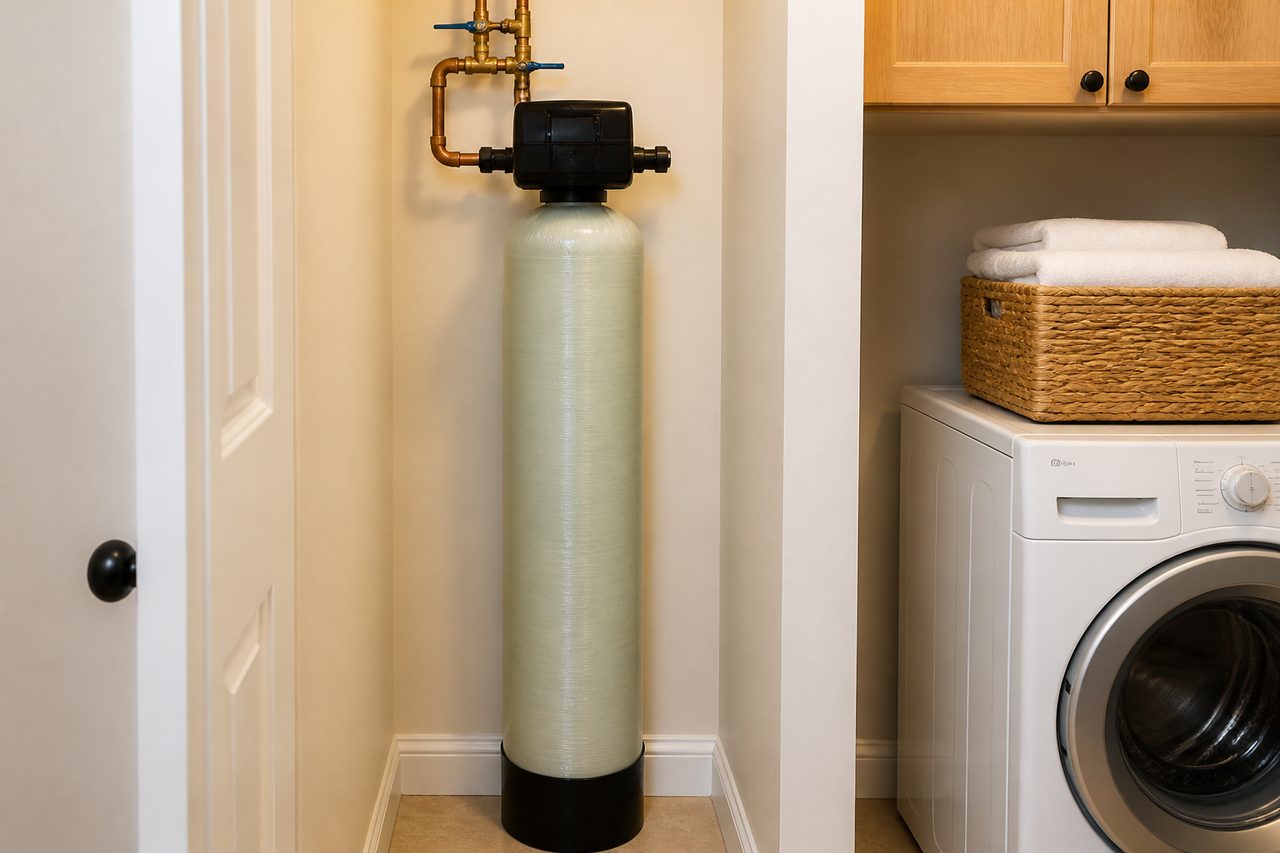
A salt-free conditioner changes how scale sticks. It does not soften. Soap and spots stay closer to untreated. No brine line.
If the water tastes like pool-plus-ammonia
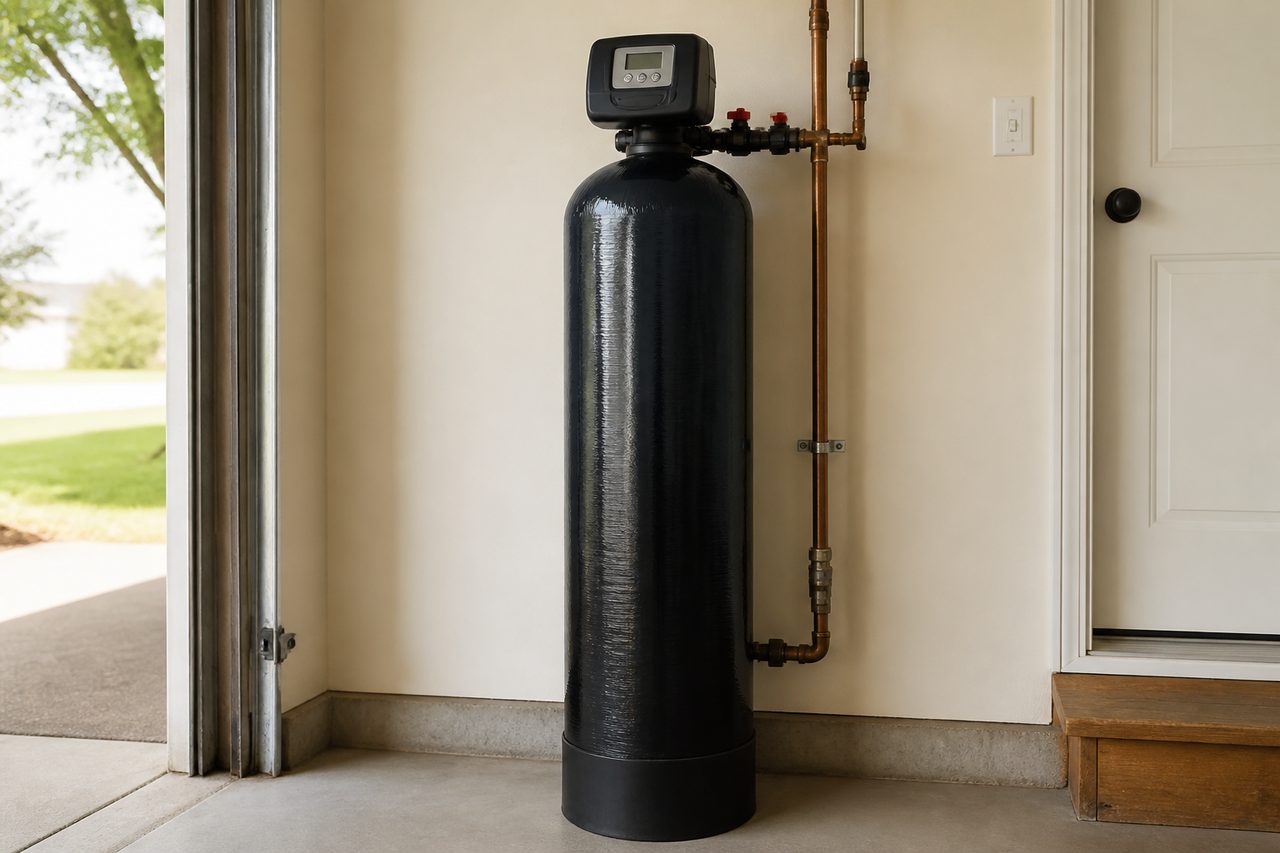
Catalytic carbon with a chloramine claim (NSF/ANSI 42 for chloramine). Regular chlorine carbon is the wrong box.
If you are shopping a PFAS listing for the kitchen
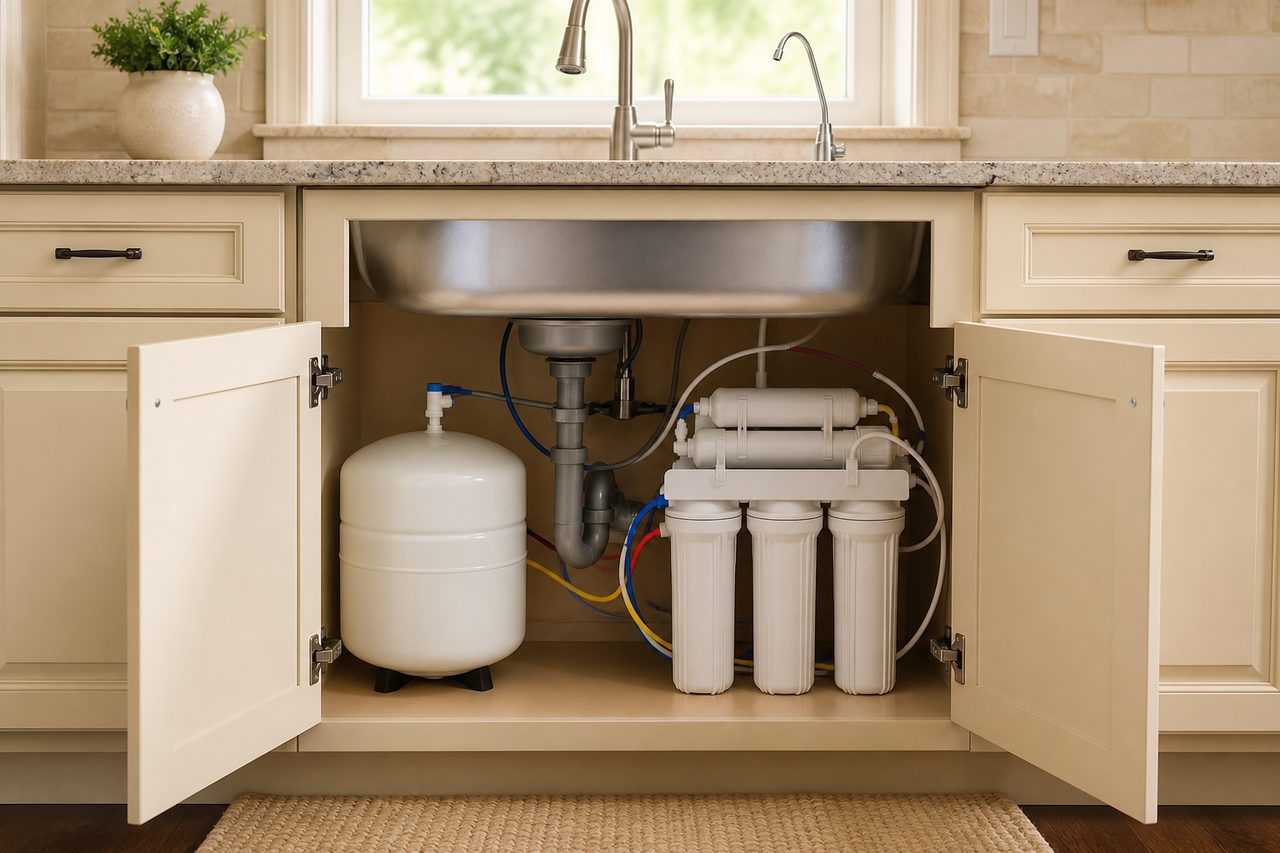
The under-sink RO we actually run is Cloud RO — NSF/ANSI 58, kitchen tap, not a whole-house tank. Check the exact listing if PFAS is why you are shopping. Waterdrop is a tankless option if you want that path. A certifier-listed pitcher is the cheap first step. Nobody is paying for a medical claim.
Shop Cloud ROShop Waterdrop reverse osmosisShop PFAS-listed pitchers
If you have not tested the tap
A homeowner kit is a start. It is not a state-certified lab. Use a certified lab when the decision is expensive.
Sources
- Sec. 6-7.206 Water treatment devices — City of Ontario Municipal Code (American Legal). Accessed 2026-09-06.
- Ordinance regulating the regional sewerage system, § 2.6 Restrictions on self-regenerating water softening appliances — Inland Empire Utilities Agency. Accessed 2026-09-06.
- 2025 Consumer Confidence Report — Ontario Municipal Utilities Company. Accessed 2026-09-06.
Updated September 6, 2026. A city file is chemistry we can cite plus the sewer rule. No invented detections.