Paso Robles, California
Paso Robles Municipal Code § 14.10.060 prohibits new installations of residential self-regenerating water softeners (the type to which salt is added). Replacement must be a system that does not discharge salt brine, such as a portable-exchange tank. That is a city sewer/POTW rule — not a statewide ban. A 2024/2025 CCR PDF did not open from the URLs we tried; this file does not invent hardness.
This city’s report did not print a number we can put on the chart. Open the current water-quality report. We do not invent a value.
On the report
- Water utility
- City of Paso Robles Water Division
- Hardness
- A 2024 or 2025 City of Paso Robles Water Quality Report PDF did not open from the URLs we tried. The city posts current reports at the Water Quality Reports archive. This file does not copy an older year’s grains number as if it were 2024/2025. — City of Paso Robles Water Quality Reports archive
- Disinfectant
- Open the current Water Quality Report for chlorine vs chloramine. This file does not invent the residual. — City of Paso Robles Water Quality Reports archive
- Sanitation district
- City of Paso Robles (POTW)
- Brine / salt to the sewer
- Self-regenerating salt softeners prohibited (district rule). Paso Robles Municipal Code § 14.10.060 (published in the city’s sewer-use ordinance submitted to the Central Coast Regional Board) says new installations of residential self-regenerating water softeners (the type to which salt is added) are prohibited; new residential construction shall not include plumbing loops to facilitate water-softener installation; and if an existing unit must be replaced, it must be replaced with a system that does not discharge salt brine, such as a portable-exchange tank. Commercial or industrial users discharging water-softening brine must meet § 14.10.070 local limits. That is a City of Paso Robles sewer/POTW rule — not a statewide ban. Ask Public Works or the agency on the sewer bill about the address.
Also around here
Extra context besides the utility report and the chart above — geology, an unregulated table, or a published study. Not a second set of printed tap numbers.
- MicroplasticsWHO’s 2019 review examined studies that found microplastic particles in treated tap and bottled water in many places. That is a published-occurrence finding, not a number from this city’s water-quality report, and we do not invent a particles-per-liter count for the tap.Microplastics in drinking-water — World Health Organization
- PFASOpen the current Paso Robles Water Quality Report and EPA’s UCMR 5 Data Finder for this PWS. This file does not invent a detection from a ranking site.Fifth Unregulated Contaminant Monitoring Rule — U.S. Environmental Protection Agency
Paso Robles’ sewer rule is a city sewer-use ordinance, not a statewide salt-softener ban. § 14.10.060 Discharges from water softening units, as published in the sewer-use ordinance the city submitted to the Central Coast Regional Board: (A) new installations of residential self-regenerating water softeners (the type to which salt is added) are prohibited; (B) new residential construction shall not include plumbing loops to facilitate water-softener installation; (C) if an existing water softener unit must be replaced, it must be replaced with a system that does not discharge salt brine, such as a portable-exchange tank system; (D) portable-exchange systems should be used instead of on-site regeneration, and commercial or industrial users discharging water-softening brine shall not exceed the local limits in § 14.10.070.B. Ask Public Works or the agency on the sewer bill about the address. We do not invent another exception.
The city’s Water Softeners page says the wastewater plant has had difficulty meeting TDS, sodium, sulfate, and chloride limits, and that salt brine from softening units is one contributing factor. That is the city’s explanation. The ban itself is the municipal-code section.
A 2024 or 2025 Water Quality Report PDF did not open from the Document Center URLs we tried. The city lists 2024 and 2025 reports on the Water Quality Reports archive and on About Our Water. This file does not copy an older year’s grains number as if it were current. Open the latest PDF. Kitchen shopping stays the Cloud RO / Waterdrop path already used on other cities if a listing is why you are looking.
What actually fits
Some links are affiliate links. If you buy through one, we may earn a commission. That does not change the match, and it is not a medical claim.
As an Amazon Associate we earn from qualifying purchases.
If a dealer is selling hardness equipment
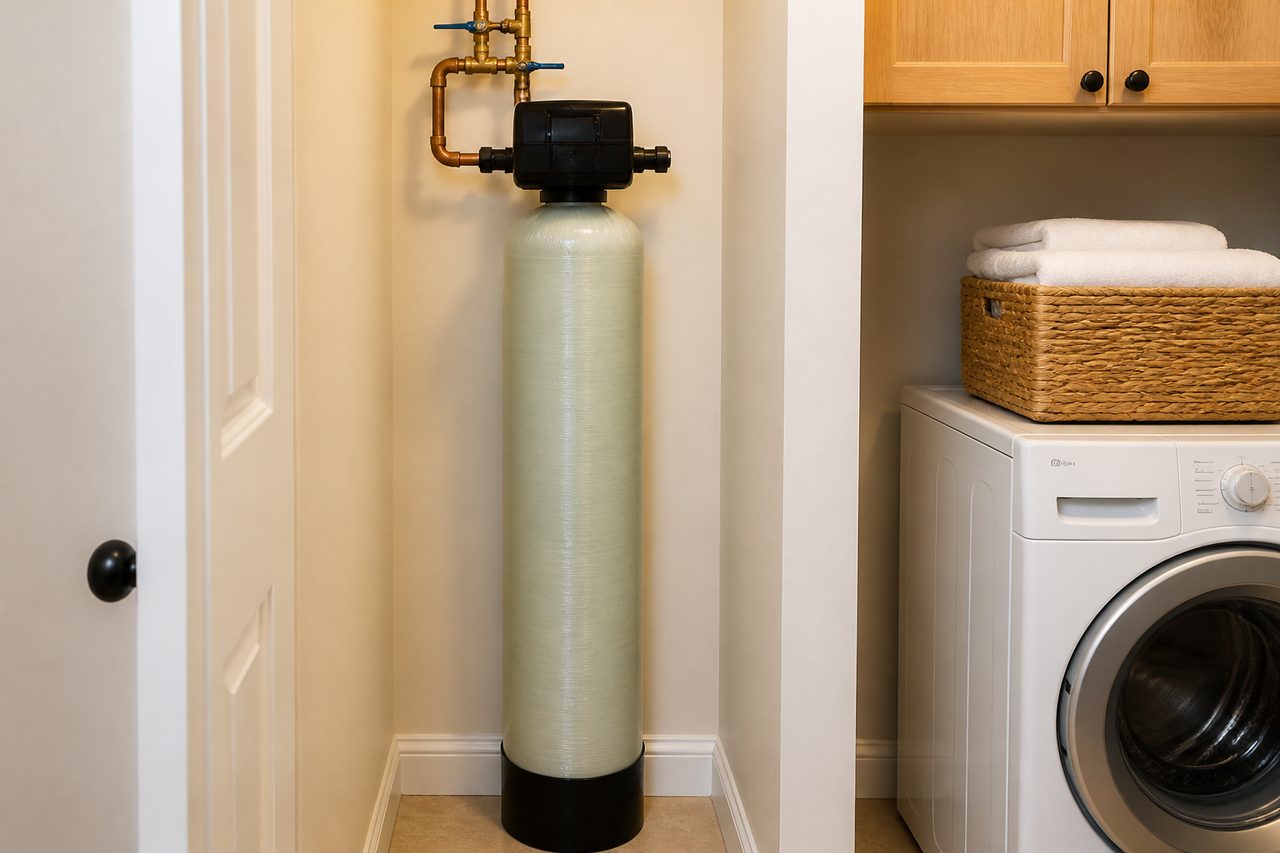
Open the current CCR for grains. This file does not invent a number from a ranking site. A salt softener needs a drain if it is legal at the address.
If the water tastes like the plant’s disinfectant
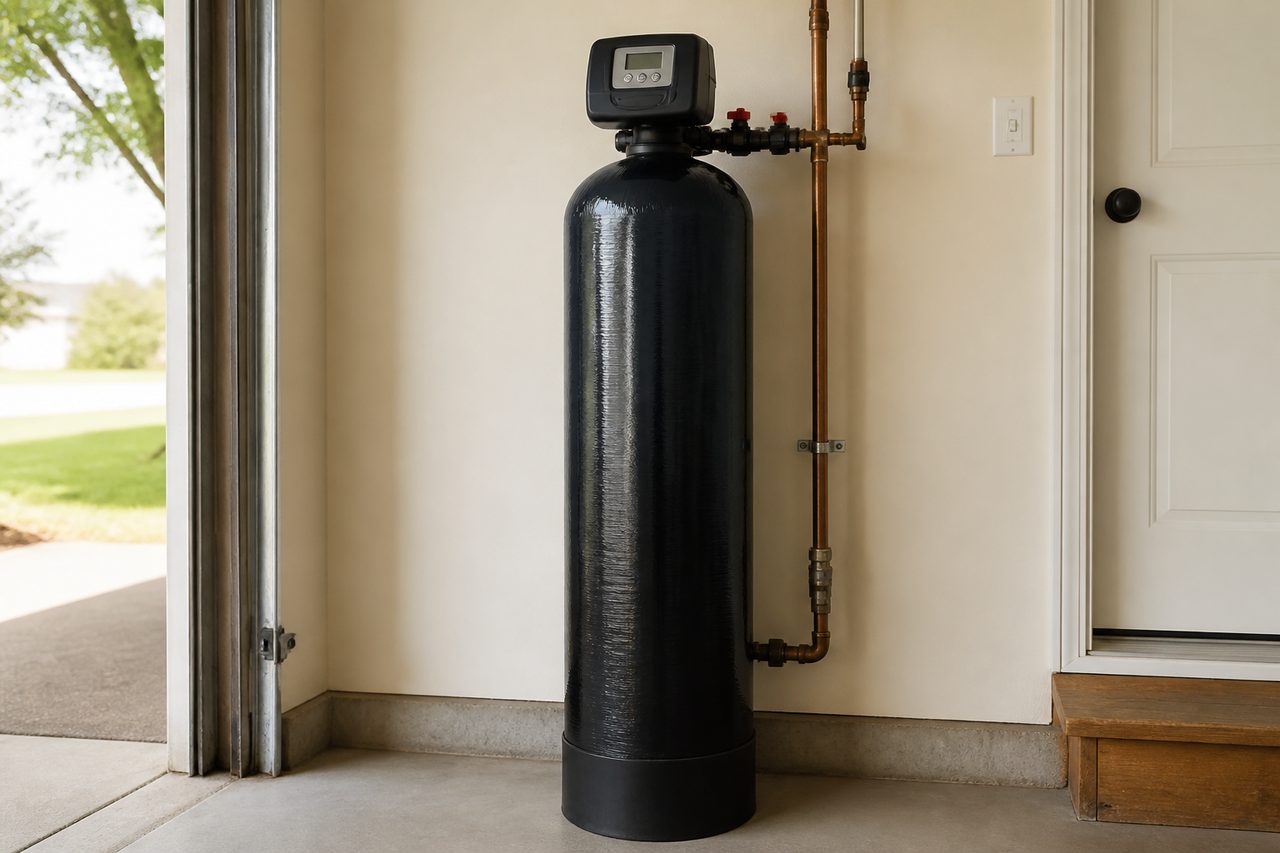
Open the CCR for chlorine vs chloramine, then match that claim. A 42 chlorine listing is not chloramine.
If you are shopping a PFAS listing for the kitchen
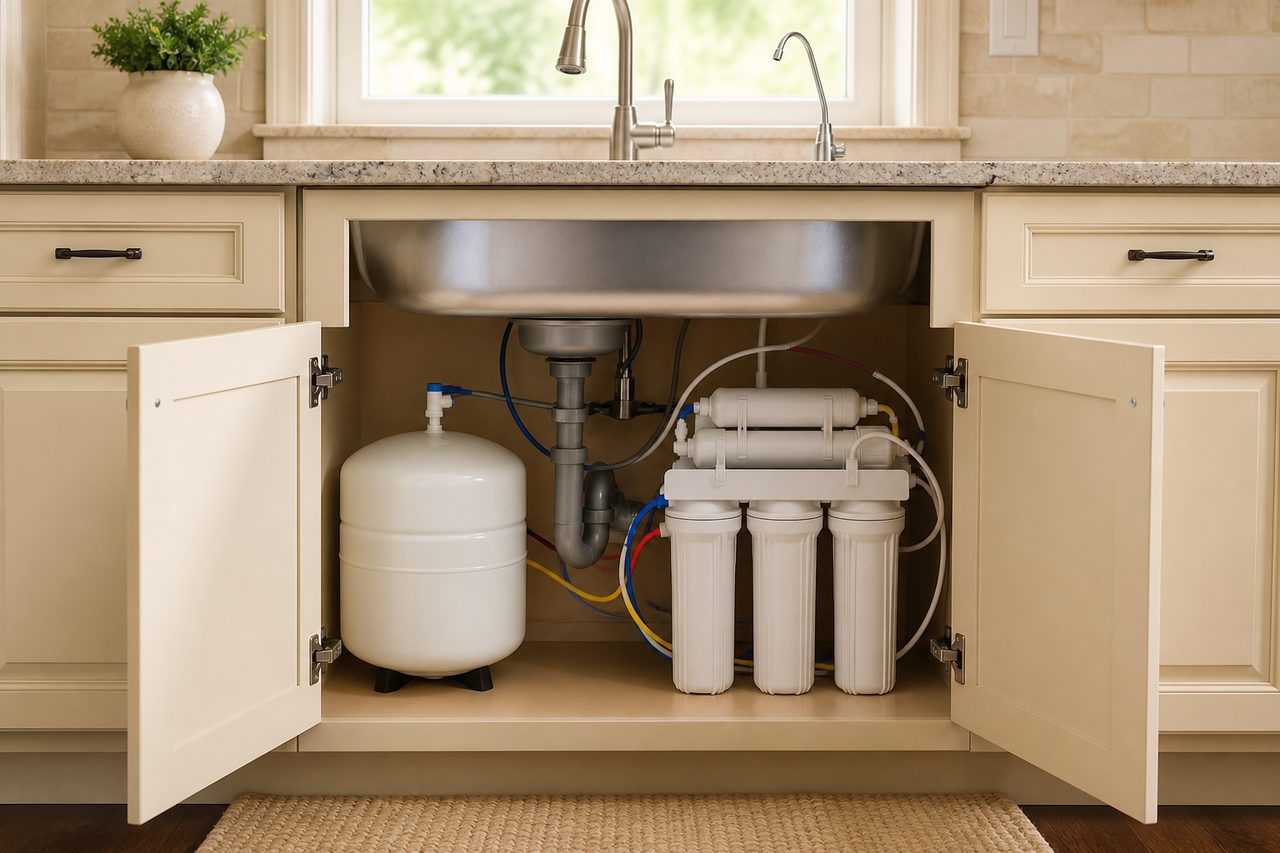
The under-sink RO we actually run is Cloud RO — NSF/ANSI 58, kitchen tap, not a whole-house tank. Check the exact listing if PFAS is why you are shopping. Waterdrop is a tankless option if you want that path. A certifier-listed pitcher is the cheap first step. Nobody is paying for a medical claim.
Shop Cloud ROShop Waterdrop reverse osmosisShop PFAS-listed pitchers
If you have not tested the tap
A homeowner kit is a start. It is not a state-certified lab. Use a certified lab when the decision is expensive.
Sources
- Sewer Use Ordinance, § 14.10.060 Discharges from water softening units — City of Paso Robles / Central Coast Regional Water Quality Control Board. Accessed 2026-09-06.
- Water Softeners — City of Paso Robles. Accessed 2026-09-06.
- Water Quality Reports — City of Paso Robles Water Division. Accessed 2026-09-06.
Updated September 6, 2026. A city file is chemistry we can cite plus the sewer rule. No invented detections.