Santa Clarita, California
Santa Clarita Valley Sanitation District (LACSD) has prohibited installing automatic / salt-based self-regenerating water softeners since March 27, 2003, and Measure S (Nov. 4, 2008) required removal of installed residential units that discharge chloride to the sewer by June 30, 2009. That is a district sewer-side rule — not a citywide folklore ban and not a statewide ban. The 2026 CCR prints three hardness columns, not a citywide blend.
- Hardness (SCV surface)160 ppm (range 150–170)
- Hardness (SCV groundwater)354 ppm (range 220–480)
- Hardness (District355 ppm (range 270–470)
- HAA5 (SCV groundwater)6.2 µg/L (range <DLR–13)
- TTHMs (SCV groundwater)21 µg/L (range 4.8–52)
On the report
- Water utility
- Santa Clarita Valley Water Agency (SCV Water)
- Hardness
- SCV Water Agency Surface Water 160 ppm as CaCO3 (range 150–170). SCV Water Agency Groundwater 354 ppm (range 220–480). LA County Waterworks District — SCV Water 2026 Consumer Confidence Report (2025 calendar year)
- Disinfectant
- Surface plants Earl Schmidt Filtration Plant (ESFP) and E.G. “Jerry” Gladbach (EGJG) use ozone as primary disinfectant and chloramine as secondary. Groundwater disinfection uses various forms of chlorine and chloramine. Chloramine is in play. The 2026 CCR tables we opened do not print a clear distribution residual for the chart, so this file does not invent one. — SCV Water 2026 Consumer Confidence Report (2025 calendar year)
- Sanitation district
- Santa Clarita Valley Sanitation District (Los Angeles County Sanitation Districts)
- Brine / salt to the sewer
- Self-regenerating salt softeners prohibited (district rule). Santa Clarita Valley Sanitation District / LACSD Automatic Water Softener Ordinance — installation of automatic / salt-based self-regenerating water softeners has been prohibited in the Santa Clarita Valley since March 27, 2003. The Santa Clara River Chloride Reduction Ordinance of 2008, authorized by voter Measure S (November 4, 2008), required removal of all installed residential salt-based self-regenerating / automatic water softeners that discharge chloride to the sewer by June 30, 2009, with a compensation/rebate program. California Health & Safety Code § 116787 authorizes this district (or a successor) to require that removal after findings and a vote — it is not itself the local ban. LACSD lists portable-exchange / off-site regeneration and other non-brine systems as the usual compliant path (alternatives list at app.lacsd.org/watersoftener). Contact 1-877-CUT-SALT or cutsalt@lacsd.org. That is a Santa Clarita Valley Sanitation District sewer-side rule for addresses on the district sewer — not a citywide folklore ban for every address in the metro name, and not a statewide ban. Communities commonly served include Santa Clarita, Saugus, Valencia, Newhall, Castaic, Canyon Country, Stevenson Ranch, Fair Oaks Ranch, Bouquet Canyon, and Mint Canyon. Septic-only properties are outside this file’s sewer prohibition. Ask the agency on the sewer bill about the address.
Also around here
Extra context besides the utility report and the chart above — geology, an unregulated table, or a published study. Not a second set of printed tap numbers.
- MicroplasticsWHO’s 2019 review examined studies that found microplastic particles in treated tap and bottled water in many places. That is a published-occurrence finding, not a number from this city’s water-quality report, and we do not invent a particles-per-liter count for the tap.Microplastics in drinking-water — World Health Organization
- Other labeled groundwater / DistrictThe same 2026 CCR prints these as labeled columns. Surface HAA5 and TTHMs are NA on that row. We do not invent a citywide blend.HAA5 groundwater avg 6.2 µg/L (range <DLR–13); District #36 avg 5.5 (range 2–9.4). TTHMs groundwater avg 21 µg/L (range 4.8–52); District #36 avg 30 (range 20–47). Chromium-6 groundwater avg 1.7 µg/L (range <DLR–2.2), year of analysis 2025; District #36 <DLR; MCL 50. Footnote says that MCL became effective October 1, 2024.2026 Consumer Confidence Report (snapshot of calendar year 2025) — Santa Clarita Valley Water Agency / Los Angeles County Waterworks District
- PFOS and PFOA (labeled columns)The 2026 ADDITIONAL TESTS table prints PFOS and PFOA in ng/L as three labeled columns. Surface water is <MRL on both rows. This file does not invent a citywide PFAS number. Narrative notes PFAS treatment facilities for some wells.PFOS groundwater range <MRL–5.2 ng/L, average <MRL; District #36 range <MRL–5.5, average 4.1. PFOA groundwater range <MRL–5.9 ng/L, average <MRL; District #36 range <MRL–4.8, average <MRL.2026 Consumer Confidence Report (snapshot of calendar year 2025) — Santa Clarita Valley Water Agency / Los Angeles County Waterworks District
Santa Clarita’s rule on this file is a Santa Clarita Valley Sanitation District sewer ordinance, not a citywide folklore ban and not a statewide salt-softener ban. Los Angeles County Sanitation Districts (LACSD) is the agency. Installation of automatic / salt-based self-regenerating water softeners has been prohibited in the Santa Clarita Valley since the Automatic Water Softener Ordinance took effect on March 27, 2003. Voters passed Measure S on November 4, 2008, authorizing the Santa Clara River Chloride Reduction Ordinance of 2008, which required removal of all installed residential salt-based self-regenerating / automatic water softeners that discharge chloride to the sewer by June 30, 2009, with a compensation/rebate program. California Health & Safety Code § 116787 is the statute that lets this district require that removal after findings and a vote. It is not itself the local ban.
Communities commonly on this district sewer include Santa Clarita, Saugus, Valencia, Newhall, Castaic, Canyon Country, Stevenson Ranch, Fair Oaks Ranch, Bouquet Canyon, and Mint Canyon. Addresses not on the district sewer — including septic-only properties — are outside this file’s prohibition. Ask LACSD or the agency printed on the sewer bill about the address. LACSD keeps an alternatives list at app.lacsd.org/watersoftener; portable-exchange tanks regenerated off site and other non-brine systems are the usual compliant path. The district lists 1-877-CUT-SALT and cutsalt@lacsd.org. We do not invent product claims from that list.
Drinking water for most of the valley is Santa Clarita Valley Water Agency (SCV Water). Some pockets are Los Angeles County Waterworks District No. 36, printed on the same regional report. The 2026 Consumer Confidence Report is a snapshot of calendar year 2025. Hardness as CaCO3 is three labeled columns — SCV Water surface water 160 ppm (range 150–170), SCV Water groundwater 354 ppm (range 220–480), and District #36 355 ppm (range 270–470). We do not invent a citywide blend.
Surface plants Earl Schmidt Filtration Plant and E.G. “Jerry” Gladbach use ozone as the primary disinfectant and chloramine as secondary. Groundwater disinfection uses various forms of chlorine and chloramine. The 2026 tables we opened do not print a clear distribution residual, so this file does not invent one. Groundwater HAA5 6.2 µg/L (range <DLR–13); District #36 5.5 (range 2–9.4). Groundwater TTHMs 21 µg/L (range 4.8–52); District #36 30 (range 20–47). Chromium-6 groundwater 1.7 µg/L (range <DLR–2.2), 2025, MCL 50. PFOS and PFOA are printed as labeled columns in ng/L — not a citywide PFAS number. Kitchen shopping stays the Cloud RO / Waterdrop path already used on other cities if a listing is why you are looking.
What actually fits
Some links are affiliate links. If you buy through one, we may earn a commission. That does not change the match, and it is not a medical claim.
As an Amazon Associate we earn from qualifying purchases.
If you want actual soft water
Portable-exchange tanks, if that exception applies at your address. The resin still removes hardness. The salt work happens off site. Do not install a self-regenerating unit to the sewer here.
If you only want less scale and you hate salt bags
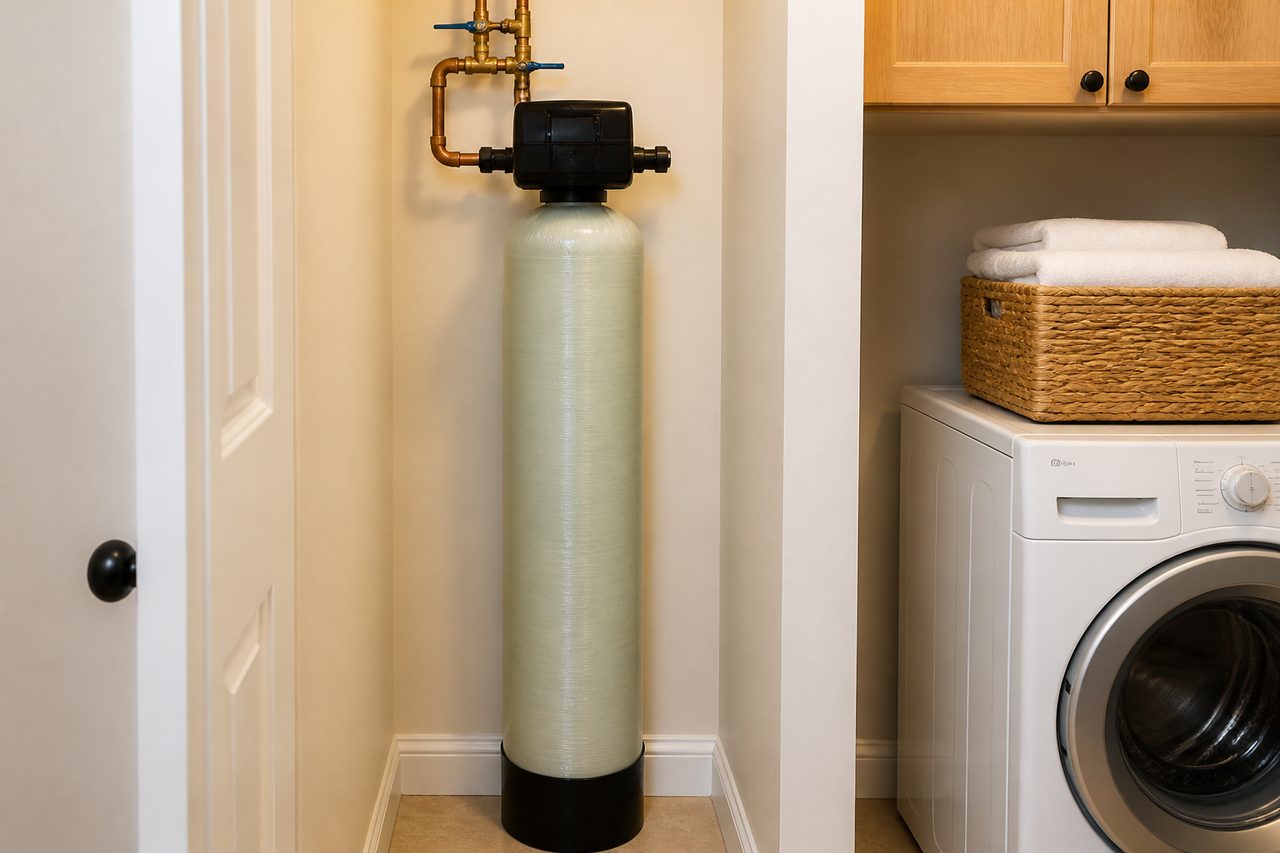
A salt-free conditioner changes how scale sticks. It does not soften. Soap and spots stay closer to untreated. No brine line.
If the water tastes like pool-plus-ammonia
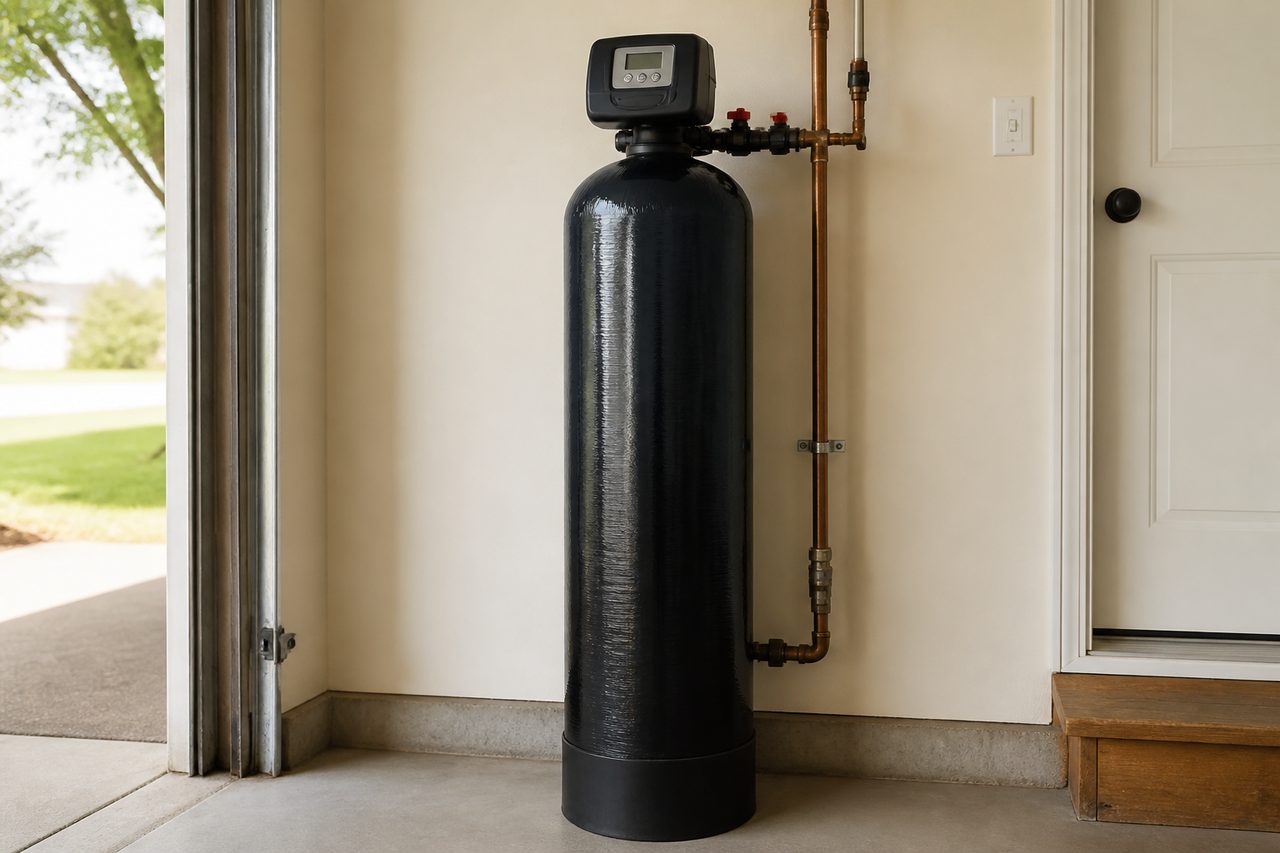
Catalytic carbon with a chloramine claim (NSF/ANSI 42 for chloramine). Regular chlorine carbon is the wrong box.
If you are shopping a PFAS listing for the kitchen
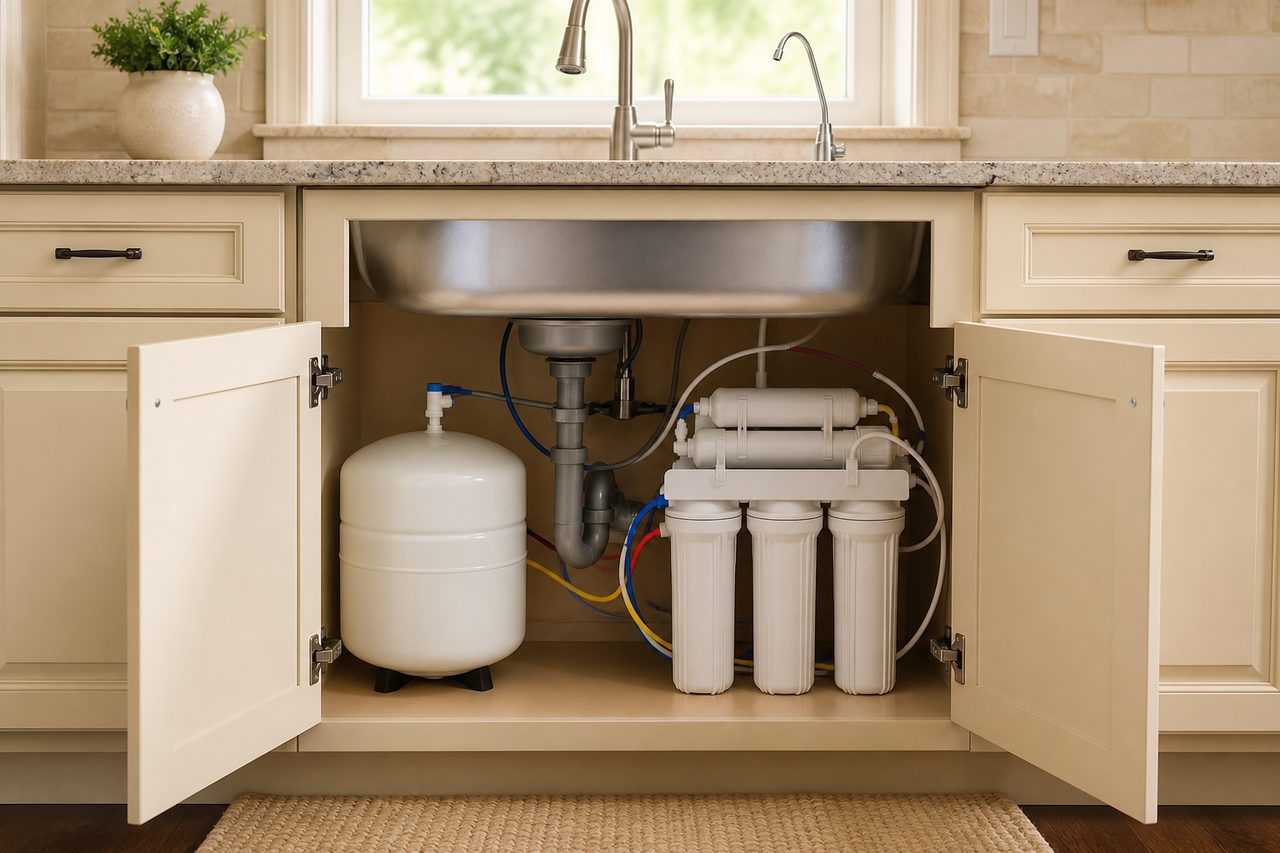
The under-sink RO we actually run is Cloud RO — NSF/ANSI 58, kitchen tap, not a whole-house tank. Check the exact listing if PFAS is why you are shopping. Shop Amazon first for under-sink RO, or buy Cloud direct. Waterdrop is a tankless option if you want that path. A certifier-listed pitcher is the cheap first step. Nobody is paying for a medical claim.
Shop under-sink reverse osmosisBuy Cloud RO directShop Waterdrop reverse osmosisShop PFAS-listed pitchers
If you have not tested the tap
A homeowner kit is a start. It is not a state-certified lab. Use a certified lab when the decision is expensive.
Sources
- Automatic Water Softeners in the Santa Clarita Valley (2003 install ban; Measure S / Chloride Reduction Ordinance of 2008) — Los Angeles County Sanitation Districts / Santa Clarita Valley Sanitation District. Accessed 2026-09-08.
- Acceptable Alternatives to Automatic Water Softeners — Los Angeles County Sanitation Districts. Accessed 2026-09-08.
- California Health & Safety Code § 116787 (authorizes district removal ordinance after findings and a vote) — California Legislative Information. Accessed 2026-09-08.
- 2026 Consumer Confidence Report (snapshot of calendar year 2025) — Santa Clarita Valley Water Agency / Los Angeles County Waterworks District. Accessed 2026-09-08.
Updated September 8, 2026. A city file is chemistry we can cite plus the sewer rule. No invented detections.