Santa Rosa, California
City of Santa Rosa 2025 Water Quality Report (reported June 2026). Narrative hardness 112 ppm average. Table prints Sonoma Water 109.8 ppm (106–125) and Santa Rosa wells 138 ppm (136–140). Free chlorine residual 1.16 ppm. No Measure S-style residential softener ban ordinance opened — check the sewer agency on the bill.
- Hardness (Sonoma Water)109.8 ppm (range 106–125)
- Hardness (Santa Rosa wells)138 ppm (range 136–140)
- Free chlorine1.16 ppm (range 0.11–1.90)
Best match for Santa Rosa
Salt-based water softener — confirm the district first
Check the sanitation district before installing a salt system.
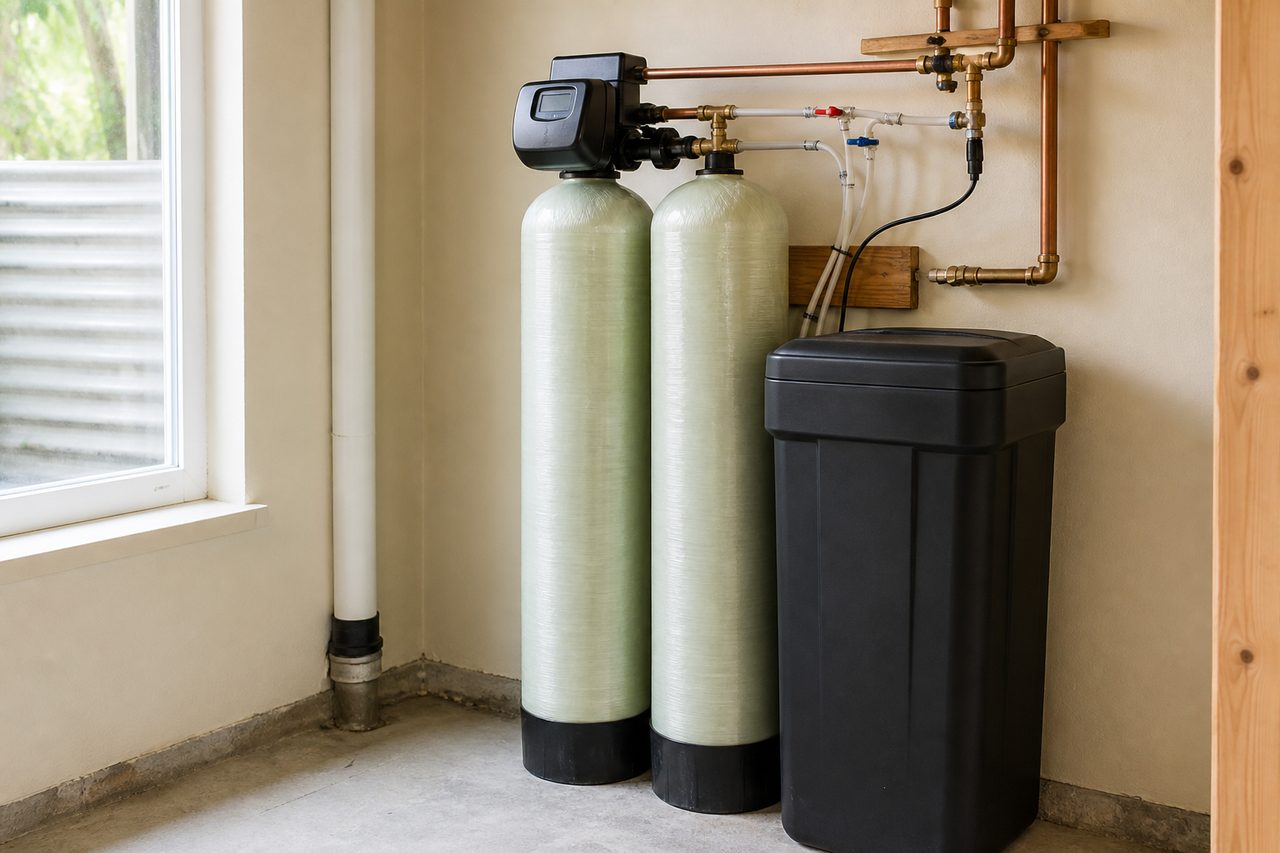
Ask the agency on the sewer side of the bill before you cut a brine drain. California lets districts restrict self-regenerating units. A “banned in California” blog is not your district.
Some links are affiliate links. If you buy through one, we may earn a commission. That does not change the match, and it is not a medical claim.
As an Amazon Associate we earn from qualifying purchases.
Other options that still fit
Salt-free conditioner
A salt-free conditioner changes how scale sticks. It does not soften. Soap and spots stay closer to untreated. No brine line.
Whole-house carbon for chlorine
That is chlorine. A whole-house carbon filter with an NSF/ANSI 42 chlorine claim is the usual match. A softener will not take chlorine out.
Under-sink reverse osmosis
The under-sink RO we actually run is Cloud RO — NSF/ANSI 58, kitchen tap, not a whole-house tank. Check the exact listing if PFAS is why you are shopping. Shop Amazon first for under-sink RO, or buy Cloud direct. Waterdrop is a tankless option if you want that path. A certifier-listed pitcher is the cheap first step. Nobody is paying for a medical claim.
Shop under-sink reverse osmosisBuy Cloud RO directShop Waterdrop reverse osmosisShop PFAS-listed pitchers
Test the tap first
A homeowner kit is a start. It is not a state-certified lab. Use a certified lab when the decision is expensive.
On the report
- Water utility
- Santa Rosa Water
- Hardness
- Narrative says Santa Rosa’s water is moderately hard at an average level detected of 112 ppm. Additional-constituents table prints total hardness as CaCO3 — Sonoma Water 106–125 ppm, reporting value 109.8; Santa Rosa wells 136–140 ppm, reporting value 138. Those are two labeled 2025 source columns plus the narrative average, not a third number we blended. 2025 Water Quality Report. — City of Santa Rosa 2025 Water Quality Report
- Disinfectant
- Disinfectant — free chlorine (Cl2) residual on the Santa Rosa distribution column 0.11–1.90 ppm, reporting value 1.16 ppm. MRDL 4.0 as Cl2. Disinfectant to control microbes. Sonoma Water column on that row is NA. 2025 report. — City of Santa Rosa 2025 Water Quality Report
- Brine / salt to the sewer
- Check the sanitation district before installing. No Santa Rosa Water or City of Santa Rosa residential self-regenerating softener ban like LACSD Measure S turned up. That is not a statewide ban finding. Ask the sewer agency on the bill before you cut a brine drain.
Also around here
Extra context besides the utility report and the chart above — geology, an unregulated table, or a published study. Not a second set of printed tap numbers.
- MicroplasticsWHO’s 2019 review examined studies that found microplastic particles in treated tap and bottled water in many places. That is a published-occurrence finding, not a number from this city’s water-quality report, and we do not invent a particles-per-liter count for the tap.Microplastics in drinking-water — World Health Organization
- Other 2025 table numbersThe same 2025 report prints these as labeled Sonoma Water / Santa Rosa distribution results, not a blend we invented.Santa Rosa distribution TTHMs reporting value 25.5 ppb (range 18.7–36.0). HAA5 8.4 ppb (range 4.8–12.4).2025 Water Quality Report (reported June 2026) — Santa Rosa Water
Santa Rosa drinking water is about 95% purchased from Sonoma Water (Russian River) plus City groundwater wells. No City of Santa Rosa residential softener ban like LACSD Measure S turned up. Ask the sewer agency on the bill before you cut a brine drain. This is not a legal opinion and not a statewide ban.
The 2025 report’s narrative prints hardness 112 ppm average. The table prints Sonoma Water 109.8 ppm (range 106–125) and Santa Rosa wells 138 ppm (range 136–140). We do not invent a citywide blend beyond those labeled figures.
Free chlorine residual 1.16 ppm (range 0.11–1.90) on the Santa Rosa distribution column. Kitchen shopping stays the Cloud RO / Waterdrop path already used on other cities if a listing is why you are looking.
Sources
- 2025 Water Quality Report (reported June 2026) — Santa Rosa Water. Accessed 2026-09-09.
Updated September 9, 2026. A city file is chemistry we can cite plus the sewer rule. No invented detections.