Activated carbon (whole-house or POU)

GAC or carbon block for aesthetic chlorine/chloramine and, only when listed, specific NSF/ANSI 53 health-effects claims.
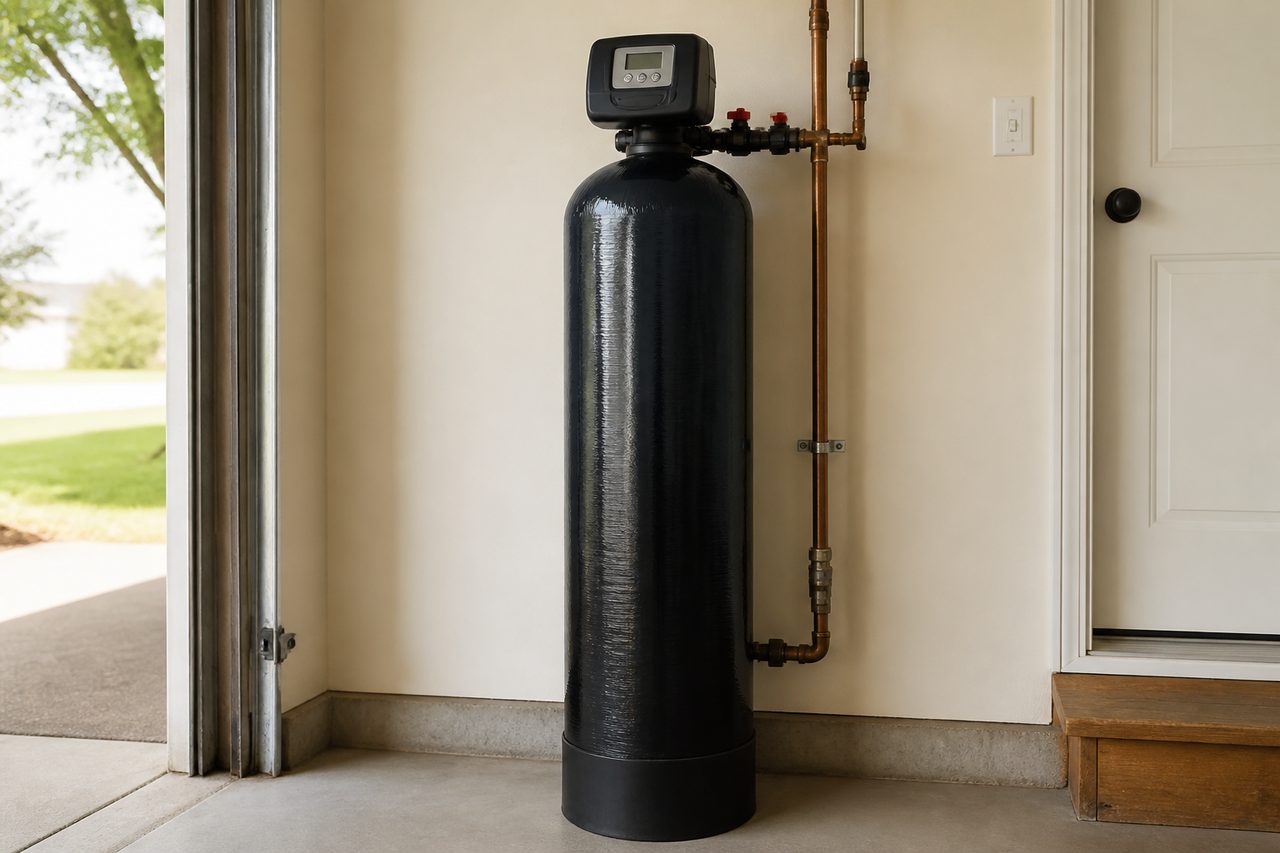
A single black whole-house carbon tank with a control head, installed in a garage and connected to copper pipe.
Whole-house carbon tank. No brine tank.
What it actually does
Adsorb (and with catalytic carbon, help decompose) disinfectant and many taste-and-odor compounds; may carry contaminant-specific 53 claims on a named model.
What it does not do
Does not soften. A 42 chlorine listing is not chloramine, lead, fluoride, or PFAS. A big POE tank is not a PFAS device unless that exact model is listed for PFAS.
Brine / salt discharge
No brine discharge
Typical use
City water when the complaint is disinfectant taste or odor; kitchen POU when a specific 53 claim is the job.
Certification language
NSF/ANSI 42 = aesthetic (chlorine, taste/odor, chloramine as separate claims). NSF/ANSI 53 = health-effects claims listed per contaminant. NSF/ANSI 61 on media is materials safety only.

Some links are affiliate links. If you buy through one, we may earn a commission. That does not change the match, and it is not a medical claim.

As an Amazon Associate we earn from qualifying purchases.

Shop whole-house carbonShop catalytic carbon for chloramine

Match the disinfectant on the CCR. Phoenix: chlorine. SCV: chloramine. Then match the claim, not the tank diameter.

For PFAS, stop calling it “carbon” and start calling it a listed 53 or 58 product.