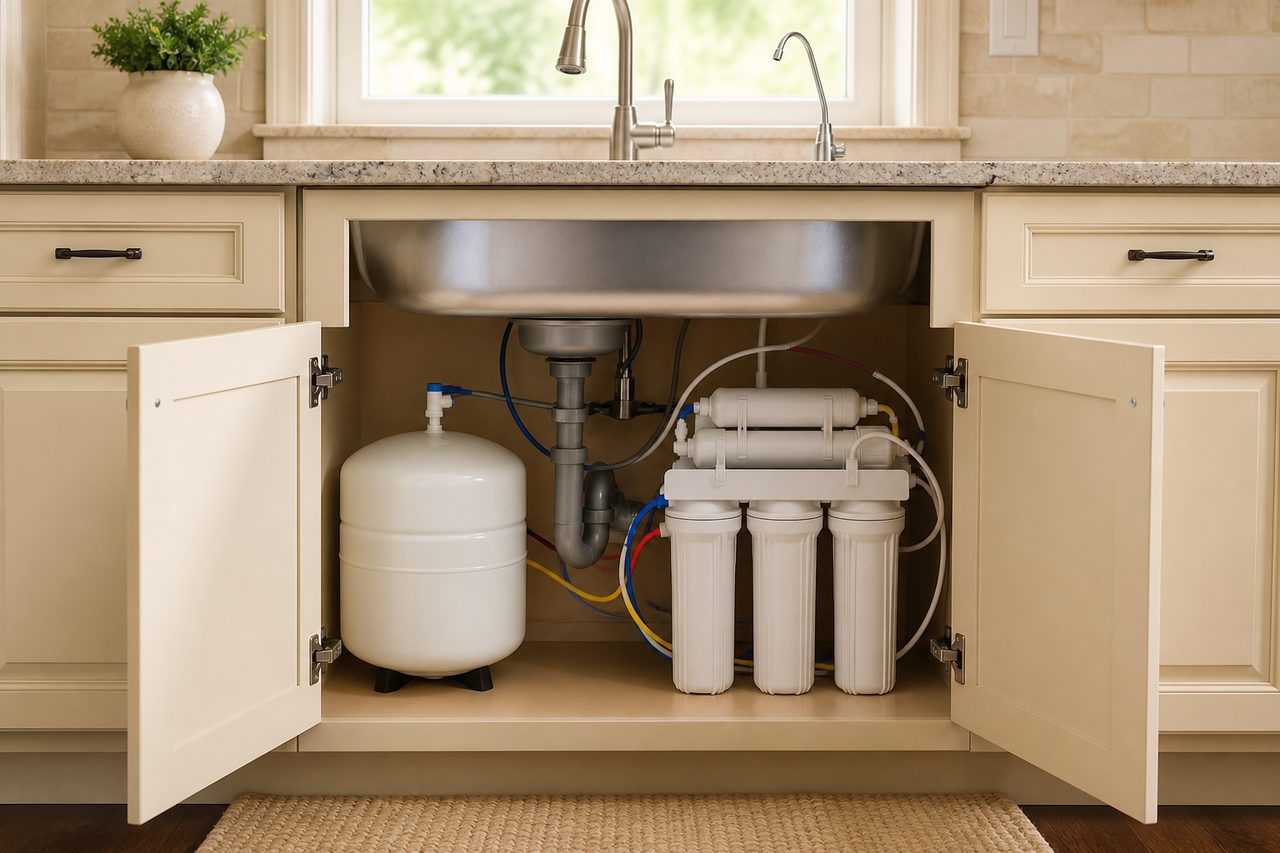
A semi-permeable membrane that rejects dissolved solids and, when listed, specific contaminants under NSF/ANSI 58 — including PFAS if that claim is on the model.
Under-sink reverse osmosis: filters, tank, and a second faucet.
What it actually does
Produces a separate drinking-water stream with reduced TDS and any contaminants named on that system’s 58 listing (fluoride, arsenic, nitrate, chromium-6, lead, PFAS — only if listed).
What it does not do
Does not treat the whole house, does not soften showers, and does not excuse a missing directory listing. It sends a waste stream to a drain.
Brine / salt discharge
No brine discharge
Typical use
Kitchen drinking and cooking water when you want listed dissolved-contaminant reduction. Pair with appropriate pretreatment (sediment, carbon, hardness/iron as the membrane vendor requires).
Certification language
NSF/ANSI 58 is the RO standard. PFAS, lead, and fluoride are separate optional claims. EPA lists 58 PFAS reduction as the RO shopping language and notes certifications (as of April 2024) are not yet aligned to the newest EPA PFAS MCLs.
Some links are affiliate links. If you buy through one, we may earn a commission. That does not change the match, and it is not a medical claim.
As an Amazon Associate we earn from qualifying purchases.
RO is a drinking-water tool. Dealers bundle it into $10,000 “whole-house” quotes because it photographs well. Read it as a 58 listing plus a drain. EPA’s research page described studied RO wasting about a gallon per gallon treated; use the ratio on the unit you buy.
Whole-house RO exists in commercial literature. It is not the first residential match on this directory and we will not invent household recovery rates for it.